Our Members' Blogs

Showing posts with label Meditation. Show all posts

Friday, September 5, 2014

Should we sit quietly during prayer? (Part 1 of 3)

By Connie Rossini 


A Hermit Praying in the Ruins of a Roman Temple by Hubert Robert


Last week I wrote about St. Teresa’s of Avila’s method of mental prayer. Today I want to discuss misunderstandings about prayer from a different angle. Since we desire contemplation, should we sit still in prayer and wait for it? Should we try to make it happen by quieting our minds? Like last Friday’s post, this series speaks to the differences between Carmelite teaching and Centering Prayer, yoga, and other types of meditation influenced by eastern religions.

Some people falsely equate silence with supernatural (infused) contemplation. They read about the need for interior silence in prayer, and they mistakenly think that if they sit quietly, God will necessarily bestow contemplation upon them. They equate the peace they find in silence to communion with God.

The Vatican has cautioned us about certain methods of prayer

In 1989, Cardinal Joseph Ratzinger (later Pope Benedict XVI), as head of the Congregation for the Doctrine of the Faith, wrote Letter to the Bishops of the Catholic Church on Some Aspects of Christian Meditation. Here is what the document says about silence:
Similar methods of meditation, on the other hand, including those which have their starting-point in the words and deeds of Jesus, try as far as possible to put aside everything that is worldly, sense perceptible or conceptually limited. It is thus an attempt to ascend to or immerse oneself in the sphere of the divine, which, as such, is neither terrestrial, sense-perceptible nor capable of conceptualization.” (11)

Continue reading at Contemplative Homeschool.

Friday, August 29, 2014

Did Teresa of Avila teach Centering Payer?

By Connie Rossini


St. Teresa's Transverberation by Joefa de Obidos (Wikimedia Commons)


Last winter on social media, I came across another Catholic author who was promoting yoga. Not as an exercise program, but for spiritual growth. I was shocked. I asked her why she wasn’t promoting prayer instead. She answered, “Meditation is prayer!”

Nope.

Two months ago, my brother forwarded an email from a colleague, asking about Centering Prayer. A friend was pushing it relentlessly. I looked at the website of the Catholic group that promotes Centering Prayer and found this in the FAQs:
This form of prayer was first practiced and taught by the Desert Fathers of Egypt … the Carmelites St. Teresa of Avila, St. John of the Cross and St. Therese of Lisieux…

Nonsense.

The other day a new reader asked in the comments about meditating on Sacred Scripture. “Is this the same as the method of Fr. John Main, who has adapted an Eastern mantra method for Christian meditation?”

Uh-uh.

I have written a little on this topic before, but I think it’s time to revisit it. Let’s start with Teresa of Avila.


Continue reading at Connie's blog Contemplative Homeschool.

Saturday, July 19, 2014

Vacation meditation

By Carlos X.

St. Damien, before he set off for Hawaii (Wikipedia).


Staring intently at the sun setting behind Molokai, from Maui, where I was on vacation with my family this summer, was, for me, a religious experience (the two Hawaiian islands are only 7.5 miles apart).  The sunset has since time immemorial been a spiritual hour for Christians: the Vespers have been recited at this time since at least the 4th century; the glorious refraction of the sun’s light across the sky creates a natural stained glass window, and the fall of darkness recalls the hour of the death on the Cross.  Going on vacation can take us out of our normal schedule, threatening to disrupt our prayer life.<  But powerful moments such as the sunset—which happens every day, and being on vacation may leave us more at liberty to observe—can provide an opportunity to keep up our prayer life and indeed enrich it.

One way to seize upon such unplanned and unexpected moments is meditation—that “freestyle” form of conversation with God, which differs from regular prayer in that prayer attempts to articulate in words our needs and praise, while meditation “engages thought, imagination, emotion, and desire.” 
[Catechism of the Catholic Church, §2708.]  It is often said that meditation in the Christian sense involves an active process—engaging the mind through thought, imagery, reflection, etc.—whereas “eastern” forms of meditation often involve “emptying” oneself of these.  Catholics may turn to these other techniques for “a path to interior peace and psychic balance,” but they are not effective substitutes for prayer. [Letter to the Bishops on Some Aspects of Christian Meditation, Congregation for the Doctrine of the Faith, J. Ratzinger, Prefect, 1989.]  “Christian prayer should go further: to the knowledge of the love of the Lord Jesus, to union with Him.”  [Catechism, supra.]
Continue reading at Carlos' blog Super Martyrio.

Tuesday, April 22, 2014

A mystical maelstrom

By David Torkington


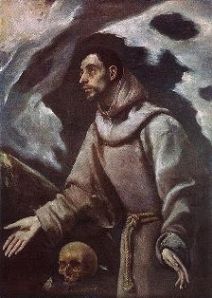
email large px-El_Greco_-_The_Ecstasy_of_St_Francis_-_WGA10458
The Ecstacy of St. Francis by El Greco
(Wikimedia Commons).


 When Christ came, it was to announce something that no other religion had ever  taught, nor any other religion taught since. Namely that the ultimate power, the ultimate energy the  infinite source of all creation, is not some impersonal super-power, but infinite love, no,  infinite loving.

Love cannot exist without a lover. Before time began, Christ was the recipient of his Father’s love. He was inextricably caught up in a mystical maelstrom of loving that flowed to and fro between him and his Father  from all eternity.

When human beings love, their love is both physical and spiritual, but God has no body, so he loves with his spirit alone. As a mark of respect therefore, tradition has taught us to call his loving,  The Holy Spirit. Jesus not only came to tell us this, but to enable us to receive this loving for ourselves. So when, after the Ascension he returned to where he had enjoyed his Father’s love before,  he returned not just as a divine being, but as a human being too.


Continue reading at David's blog David Torkington.

Thursday, February 27, 2014

Overcoming distractions during prayer

By Carlos X.


File:San Pedro en lƔgrimas - Murillo.jpg
St. Peter in Tears by Murillo (Wikimedia Commons).


"That labor of the intellect which we call meditation," wrote the Venerable Fr. Luis De La Puente (1554-1624), “is among the most difficult things about mental prayer.” We all know the reasons: “It is easy to have several things in mind at once, and to dash from one thing to another without order or concert, but it is very difficult to think about a single thing with concentration, with fixed memory and understanding of God, without diverting to or spilling over to other things; even the great Saints have this trouble sometimes, and they complain about it.”

Fr. La Puente prescribes four potent tools to avoid distractions during prayer:
  • Profound humility
  • Prayer itself
  • Faith
  • Spiritual fortitude

Fr. La Puente was the subject of Archbishop Ɠscar A. Romero’s thesis for his doctorate studies in theology.  Romero never obtained the degree but he put Fr. La Puente’s methods into practice. Fr. La Puente spurred the young Romero to strive to perfect his devotion.  “In recent days the Lord has inspired in me a great desire for holiness, after I had read some of Father La Puente,” Romero wrote in his diary in February 1943."I have been thinking of how far a soul can ascend if it lets itself be possessed entirely by God." But, like the saints that Fr. La Puente tells us had trouble concentrating during prayer, Archbishop Romero sometimes felt distracted.


Continue reading at Carlos' blog Super Martyrio.

Saturday, December 28, 2013

Mary's memories--meditaions on the Rosary

By Mallory Hoffman


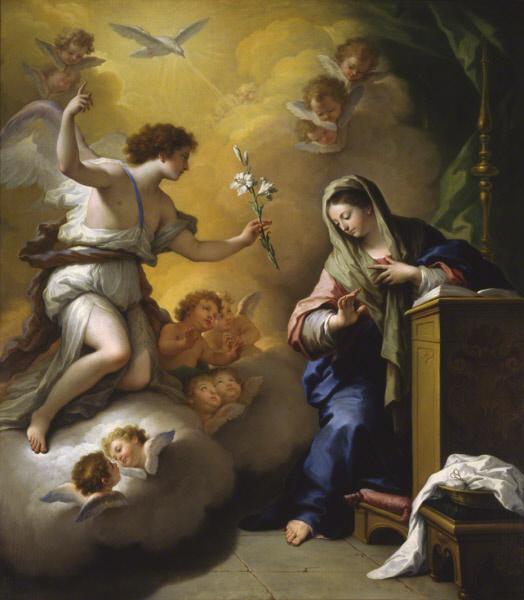
File:Paolo de Matteis - The Annunciation.jpg
The Annunciation by de Matteis (Wikimedia Commons).


Pope John Paul II wrote of "Mary's Memories" in the Rosary.   In his Apostolic letter "Rosarium Virginis Mariae"  Pope John Paul, soon to be canonized, wrote,

"Mary lived with her eyes fixed on Christ, treasuring his every word: “She kept all these things, pondering them in her heart” (Lk 2:19; cf. 2:51). The memories of Jesus, impressed upon her heart, were always with her, leading her to reflect on the various moments of her life at her Son's side. In a way those memories were to be the “rosary” which she recited uninterruptedly throughout her earthly life."

With the season of Advent upon us, our focus should turn to Mary, the Mother of God.  By imitating her virtue, we will be better prepared to greet her Son on Christmas Day.    Inspired by her memories of the Rosary, I wrote these Meditations on the Rosary.  The first ones we encounter in "Mary's memories," are the Joyful mysteries.  As I wrote, I tried to look at these mysteries through Mary's eyes.  Of course, these responses are fictional.  I am writing these, not Mary.  My hope is that by looking at these mysteries through Mary's eyes, we will come to know Jesus better.

Mary's Memories
Meditations on the Rosary

The Joyful Mysteries

The Annunciation


I was praying, thanking God for all of His goodness and mercies.  I heard my name whispered in the wind.  I opened my eyes and I saw a being of light in front of me.  He greeted me by saying, "Hail, full of grace."  I was surprised by such a greeting.  He was so beautiful.  I knew he was from God.  He told me his name was Gabriel.  He told me that I was blessed among women.  He said that I would bear a son, the Promised One, and that I would name Him Jesus.  I was very surprised.  I didn't understand how this could be since I had not known man.  He said that the power of the Holy Spirit would come upon me.  This is how I would conceive my Son, the Holy one of God.  I replied that it should be done according to God's Will.  When the angel left, I knew I was with child.


 Continue reading at Mallory's blog His UnEnding Love.

Friday, August 9, 2013

Speaking with God

by Barbara A. Schoeneberger


File:InfantSamuel.jpg
The Infant Samuel by Reynolds (photo credit: Wikimedia Commons).


The spiritual idiolect, that is, our own unique ways of speaking with God, was a new concept for me when I found it at this blog. It often takes me awhile to make something new my own before I can express myself adequately, and so it has been with this spiritual idiolect concept.

I never really thought before about how I communicate with God. I just did it. But now, reviewing a life nearing the seventh decade mark, I can see a progression of expression gathered from exposure to many kinds of Christian prayer.

When we were children, my brothers and sisters and I all learned the formal prayers of the Our Father, Hail Mary, Glory be, the Apostles Creed and the numerous beautiful ejaculations such as "My Jesus, Mercy," "O Sacrament most holy, O Sacrament divine, all praise and all thanksgiving be every moment Thine" and the like. Every night we prayed on our knees by our bedside, "Now I lay me down to sleep, I pray the Lord my soul to keep. If I should die before I wake, I pray the Lord my soul to take." There was also the beautiful "Angel of God my Guardian dear, to whom God's love commits me here, ever this day be at my side to light, to guard, to rule, and guide." Great theology is contained in these prayers that became more meaningful as I deepened my relationship with God. Still today I pray them all, each one becoming a little love song or chant that only God hears.

Speaking to God from the heart


There was another way we were taught by the good sisters when we were young, and that was to talk to Jesus as a friend and a helper, especially at Holy Communion. To approach Jesus in our own words and to thank Him for coming to us and for all He has given us, to tell him our problems and to ask His help made us experience Jesus as a real Person. I still keep that simplicity of approach today when every time I enter the pew for Mass, every time I make a holy hour, the first thing I say to the Lord is, "Thank you for being here, Lord, and thank you for letting me be here. Please bless the priest and all the people at Mass today." If it's a holy hour I just stop with the first sentence and use the old A Meditation Before the Blessed Sacrament as a guide.

This informality is comfortable and puts me in the mind of a child, an attitude of trust and confidence in God's love. Many times I use it about every day things, thanking God for His help with the garden for instance, telling Him what I'd like to have happen with it, etc. When we are in ferocious storm conditions I may say something like, "Lord, protect our house and property. Well, actually, it's Your house and Your property on loan to us. Please send your angels to guard us. But if it's Your will that we be sucked up in a tornado, that's OK, too." Then I pick up my rosary and start praying, or if it's getting late at night, I just say, "Lord, I'm too tired to stay up, so I'm not going to worry about the storm. Please take care of us." Then I sleep peacefully and thank God for watching over us the next day when I wake up.

Praying with Scripture and with the Church


I use this approach when praying for others and the poor souls, or when thankfulness bursts into praise. Sometimes, though, Bible verses run through my head and I use them for a continuous prayer of praise and glory. "To the King of ages, who is immortal, invisible, the one only God, be honor and glory forever and ever, Amen" from 1 Tim. 1:17 is a favorite that I chant silently when I feel called to do so. Since the Holy Spirit gave us the Bible I figure the Lord is really pleased to have us use His words to praise Him, thank Him, petition Him, etc. It's like a great composer hearing his own composition played in his honor.

Being a Benedictine oblate, the sacred liturgy forms a major part of my way of speaking to God because, in addition to hospitality, the Benedictines are all about the official prayer of the Church, the work of the people. Every time I attend Mass or pray the Divine Office I see myself as a tiny dot in a sea of people before the throne of God. Because the sacred liturgy belongs to the Mystical Body, it's not mine to tamper with or to shrug off lightly. Keeping these thoughts in mind helps me do my best when talking to God in the words and gestures of the Church.

Then there is Lectio Divina and meditation, both of which start out in a structured pattern but end up in an informal dialogue. Reflections from the great Carmelite saints always help make my meditation fruitful as do those from the great Fathers and Doctors of the Church.

In those times when I don't feel like praying or even have an aversion to it, I rely on an informal prayer that goes something like this, "Lord, I don't feel like praying today. The thought of it repulses me. What a chore. I don't even know what I do want to do instead of praying. But I'm going to pray anyway with Your grace. Let every act of doing my duty today be praise to You for giving me life, for sending me hardships, worries, and trials as well as all the good things You've blessed me with. I owe You, Lord. Please keep reminding me so that I grow in love of You. Help me to do Your will always."

Nothing fancy here. Just plain and simple, structured and unstructured, Benedictine, Carmelite, and Patristic, individual and community, words and no words. The roots of my spiritual idiolect were set down in early childhood and have fruited in old age from some very knobby branches. The plant looks a little puny in some places, but the Master Gardner continues to snip here and there with His great pruning shears. What else can be said but, "Thanks be to God"?


Barbara blogs at  Suffering With Joy.


Tuesday, July 30, 2013

Practicing Lectio Divina

by Nancy Shuman


For Only One Short Hour by Anna Blunden (photo credit: Wikimedia Commons).


"To You I pray, O Lord; at dawn You hear my voice" (Psalm 5:3).

I know how to do this.  I have learned the basic steps of Lectio Divina, of back and forth conversation with God.

And so, if I haven't already:  today I begin.  I may feel dry as dust as I do so, but I make a start.  I take up a bit of scripture, and I read.  I ask God to help me hear what He's saying to my soul.  I read until something strikes me, then I let it sink in.  I realize that God Himself is with me, is really and truly with me.  This is not a game I'm playing, it isn't an empty exercise, it's not a task to be gotten out of the way.  I am in conversation with Almighty God.

I let the words touch me.  I let the Word Himself (John 1:1) speak to my heart.  I talk with Him about whatever I wish.  If I should feel a gentle "touch" from Him (a feeling of being loved, perhaps), I savor it.  I thank Him for it.  If I don't, I thank Him anyway.  I ask Him to help me become more pleasing to Him this day.  I ask to be directed in His paths. 

I shall now go forward, to live this day for God.    

"My soul waits for the Lord, more than sentinels wait for the dawn" (Psalm 130:6). 


Nancy originally posted this at her blog  The Cloistered Heart.

Sunday, July 28, 2013

The babe leaped in her womb

by Michael Incorvia


File:Thalheimer Retabel Aussenseite.jpg
Thalheimer Altar (photo credit: Wikimedia Commons).


"The babe leaped in her womb" (Luke 1:41) is a verse that I frequently prayerfully meditate on.  John the Baptist leaped in Elizabeth’s womb when he encountered Christ veiled in the womb of the Blessed Mother.  I prayerfully mediate on my struggle to see Christ in all who I encounter.  It is not easy to see Christ in those who cause discomfort in my life.  But, they are ones who bring opportunities to encounter and to be comforted by Christ.

Initially, encounters with Christ may not be comforting.  To approach Christ we must acknowledge our sinfulness and surrender self to follow Him.

It is difficult to see Christ in those who make us face our prideful, self-centeredness.   But, is it not Christ who scatters “the proud in the imagination of their hearts” (Luke 1:51)?  Is it not also Christ who will  “put down the mighty from their thrones, and exalted those of low degree” and who will “filled the hungry with good things, and the rich he has sent empty away” (Luke 1:52-53)?

Christ is present in those who challenge us to step outside of prideful, self-centeredness, to extend mercy to those in need; to think of another instead of self; to be humble and meek and not prideful when dealing with others; and to share what has been freely given with others.  Oh, the number of opportunities lost each day to encounter Christ!


Michael originally posted this at his blog  To Love and Truth.

Sunday, July 21, 2013

Mary pondered all these things--do you?

by Connie Rossini


File:Duccio di Buoninsegna 061.jpg
The presentation of Christ in the Temple by Duccio (photo in public domain).


There are many types of devotion to Mary. Carmelites honor Mary by imitating her. In particular, they imitate her way of meditating on the great things that God has done.

Luke’s Gospel tells us twice that “Mary kept all these things, pondering them in her heart.” She was the first contemplative Christian.  What did she ponder? What God had done for her, and what He was doing in and through her Son.

Here are some concrete ways you can live a more contemplative life, following Mary’s example:


Pray with the Scriptures

Read a short passage from the Bible. Imagine yourself as part of it. Listen to what the Holy Spirit wants to teach you through the passage. Then talk to God about it. This is known as Christian meditation, and is one form of mental prayer. Make the Gospels your primary source for meditation. Center it on Christ, as Mary did.

Study the Bible

Use a good Catholic commentary or study Bible to help you dig deeper into Scripture. The Navarre Bible contains a good mix of background information, theology, and practical helps for your spiritual life.

Memorize Bible verses

You must repeat a verse over many times in order to memorize it. Let it sink deeply into your mind and heart. Then quote it to yourself or aloud at appropriate times.


Continue reading at Connie's blog  Contemplative Homeschool.

Sunday, July 7, 2013

Start your prayer with this image

by Connie Rossini


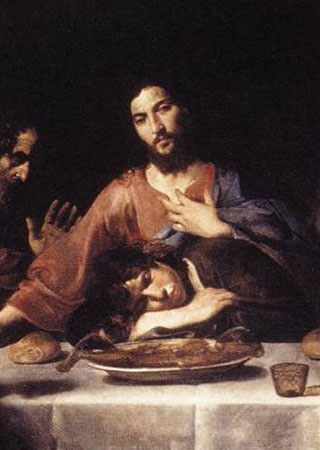
Last Supper by Valentin
Detail from The Last Supper by Valentin de Boulogne (photo in Public Domain).


Are you tired of your prayer being a shopping list read to God? Are you yearning for something more meaningful? Use this image of John the Apostle leaning on Christ’s heart to place yourself in God’s presence.

Imagine yourself in John’s place. Feel Christ’s peace surround you. Set aside your cares and concerns and immerse yourself in His love.  Offer your love in return.

For some people, this may be all you need to have a heart-to-heart half hour with God. For others, this will be an introduction to prayer, a means of calming yourself and setting aside distractions. You may then prayerfully read a passage from the Bible or other good spiritual book. Talk to Jesus about what you read. Love Him in and through it.

You are now on your way to a rewarding new prayer life.


Originally posted at Connie's blog  Contemplative Homeschool.

Monday, June 10, 2013

"Do you love me?" the Lord asks you

by Heidi


File:Ingres, Jean - Jesus Returning the Keys to St. Peter - 1820.jpg
Jesus Returning the Keys to Peter  by Ingres (Photo: Wikimedia)


Do you pray with the Scriptures?  When you read them, do you allow a word or a scene from the passage to speak to you in your heart and draw out from you a prayer?  It is essential for each of us enter into prayer in this way.  Yet, it is a direction that many "voices" - from the world, and from your own ego - will dissuade you from; because it will reveal your idols, your weaknesses.  The Lord seeks to lead us out of those "Egypts" in each one of our souls.  To do so demands much; it demands a love that endures all things, hopes all things and to be completely truthful, I do not have that love yet.  That is important for me to understand, not for me to despair but so that I can live in His truth, endure in His light and be drawn up into a more perfect love by following His voice.  

Consider this passage from John 21: 1-19:


               When they had finished breakfast, Jesus said to Simon Peter, “Simon, son of
               John, do you love me more than these?”  Simon Peter answered him, “Yes,
               Lord, you know that I love you.”  Jesus said to him, “Feed my lambs.” He
               then said to Simon Peter a second time, “Simon, son of John, do you love
               me?”  Simon Peter answered him, “Yes, Lord, you know that I love you.”
               Jesus said to him,“Tend my sheep.”  Jesus said to him the third time, “Simon,
               son of John, do you love me?” Peter was distressed that Jesus had said to
               him a third time,‘Do  you love me?’ and he said to him, “Lord, you know
               everything; you know that I love you.”  Jesus said to him, “Feed my sheep.
               Amen, amen, I say to you, when you were younger, you used to dress
               yourself and go where you wanted; but when you grow old, you will stretch
              out your hands, and someone else will dress you and lead you where you do
              not want to go.” He said this signifying by what kind of death he would glorify
              God. And when he had said this, he said to him, “Follow me.”


I need to live in His truth, I need to know who I am and  who I am called to be in His truth.  I need it desperately, and our whole culture is dying for lack of this truth.  In this Gospel, through the questions of Jesus, Peter is taken back into the bitter, memory of his betrayal of the Lord, in order to receive the profound, unfathomable mercy of Jesus so that he can be drawn up into His perfect love. What courage this takes!  We, who are so easily offended, we, who so often confess our failings in a self-justifying context, are also taken through the drama of the Lord's threefold questioning of Peter.


Continue reading Heidi's reflection at  Journey to Wisdom. 

Saturday, May 25, 2013

What is contemplation? Part I: Natural contemplation

By Connie Rossini


File:Godward-Contemplation-1903.jpg
Contemplation by Godward (Photo Credit: Wikimedia)


Contemplation for Carmelites is the summit of the spiritual life on earth. It is (or should be) the goal of all Christians. It is what we prepare our kids for in our homeschool. But there is a lot of misunderstanding about what contemplation is. The word is used in so many senses, both in secular and religious circles. In this post, we’ll look at “natural contemplation”–something all humans can experience on their own. What is Contemplation? Part II will examine what ”contemplation” means in various religions, especially the Carmelite understanding of supernatural contemplation.

The most common definition of “contemplate” is  “think about” or “meditate on.” In this sense, we can contemplate virtually anything. We’ll discuss meditation on Sacred Scripture in Part II. It is not what Carmelites generally mean by contemplation.

PƩre Marie-Eugene, O.C.D., gives a great explanation of three types of natural contemplation in
I want to See God
.

First, there is aesthetic contemplation. This is when our senses experience beauty and we respond to it with emotion. The classic example is looking at a sunset. A deep communication goes on between the beautiful thing and our heart. We no longer meditate on the details of the object, but simply gaze with love. We soak it in. We feel we have touched something transcendent.

The second type of natural contemplation is intellectual. A philosopher or scientist who has spent years looking for a key idea or law, suddenly finds it. At that moment, he stops inquiring. His intellect is stilled. He delights in his discovery.

 Continue reading about natural contemplation at  Contemplative Homeschool.


Monday, May 13, 2013

Christian prayer is much more than Eastern meditation

by Connie Rossini

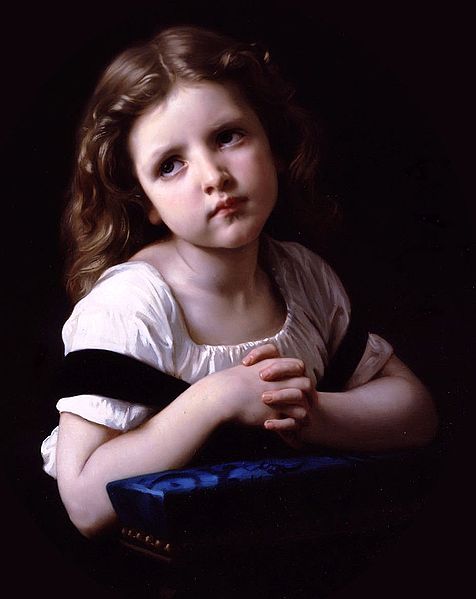
File:William-Adolphe Bouguereau (1825-1905) - The Prayer (1865) (cropped).jpg
The Prayer by William-Adolphe Bouguereau (Photo courtesy of Wikimedia Commons).


A few years ago at Mass in another diocese, the priest began a homily on the importance of daily prayer. I was elated. We hear this far too seldom from the pulpit. My elation soon turned to disappointment, however. He talked about being aware of the world around you, and your own thoughts and feelings. Shockingly, he didn’t mention God at all! I realized the priest (apparently without knowing it) was not really advocating prayer, but a Buddhist-inspired form of meditation.

Both Christians and Buddhists use the term “meditation,” so it’s no wonder sincere people confuse the practices of the separate religions. But they are quite different.

Christian meditation centers on Christ


In Crossing the Threshold of Hope, Pope John Paul II noted that Buddhists seek to free themselves from the world, while Christians seek freedom from sin, through God’s grace, in order to be united with Him. Eastern meditation might relieve stress, but it cannot save souls.
Doctor of Prayer St. Teresa of Avila gives us further insight, when she writes in the 1st chapter of Interior Castle :

“If a person neither considers to Whom he is addressing himself, what he asks, nor what he is who ventures to speak to God, although his lips may utter many words, I do not call it prayer.”

In other words, true prayer recognizes how small and sinful we are and how great God is, and addresses itself towards Him. Eastern forms of meditation are not addressed to anyone.  The question of God’s existence and character doesn’t come into play.

Prayer’s purpose is union with God


Front Cover

Christian prayer is communication with God. The conversation we have in prayer goes both ways. In fact, God’s action during prayer is more important than our words, thoughts, or feelings.  Prayer is a search for God, who promises, “You will seek me and find me; when you seek me with all your heart, I will be found by you” (Jeremiah 29:13-14). As the Song of Songs envisions it, prayer is the Beloved seeking the One who loves her. This seeking (and finding!) is the purpose of our lives. You and I were made for intimate union with God. God is love, and He invites us to share in the very love that unites the Holy Trinity. The means to this union is prayer.

Union with God unfolds in stages. When we first start praying, we have to work hard to focus on God, to meditate on (that is, ponder) His goodness, and to worship Him. Faithfulness to prayer and to God’s will opens the door to the gift of contemplation, when God secretly transforms us and draws us closer to Himself. The early stages of prayer are concerned with seeking, the later stages with finding.

Non-Christian meditation aims too low. It cannot fulfill our longing for eternal love. Do not be afraid to lift your sights higher. Do not be afraid to seek the face of God in prayer!


Share with us: How have you or others around you misunderstood the purpose of Christian prayer? What insights from your own growth in prayer can you share?

This was originally posted at Contemplative Homeschool.