Our Members' Blogs

Showing posts with label Hinduism. Show all posts

Saturday, June 1, 2013

What is contemplation? Part 2: Supernatural contemplation

by Connie Rossini


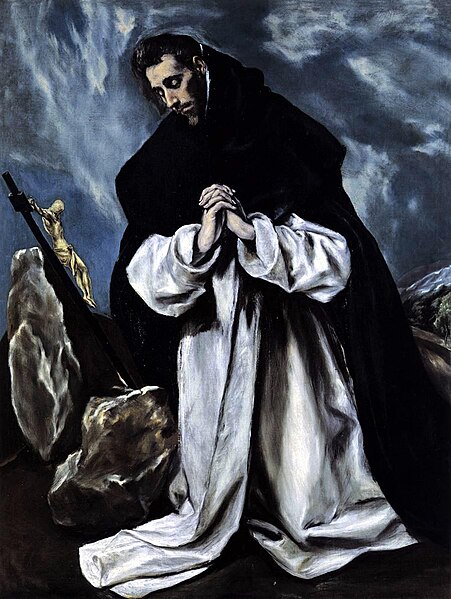
File:El Greco, St Dominic in Prayer.JPG
St. Dominic in Prayer by El Greco (Photo:Wikimedia Commons).


There are three major categories of contemplation. The first, which I wrote about last week, is natural contemplation. The second is the contemplation practiced in non-Christian religions. The third is supernatural contemplation. It is this third type of contemplation that St. Teresa of Ávila, St. John of the Cross, and other Carmelites refer to when they use the word “contemplation.”

Christian contemplation versus eastern meditation


 Non-Christian contemplation consists of an impersonal awareness. Zen Buddhists practice a meditation or contemplation that is agnostic. God does not come into play. Transcendental meditation, which comes from Hinduism, consists in losing one’s personality in an impersonal, all-encompassing deity. Both these varieties of contemplation are achieved by practitioners’ own actions, which lead to an altered state of consciousness.

Christian contemplation is completely different. It is a loving gaze at God who is Love. Supernatural in origin, it can’t be produced through techniques. Modern writers often use the modifier “infused” to indicate that God pours contemplation into the soul.

Meditating on Sacred Scripture (the Bible) can produce theological contemplation, also called acquired contemplation. Christian meditation teaches us to know and love Jesus, thus preparing us to open our hearts fully to God’s love. It helps us form the habit of quieting our souls before God, focusing on Him instead of ourselves. See an example of Christian meditation.


Continue reading about supernatural contemplation at Connie's blog  Contemplative Homeschool. 

Monday, May 13, 2013

Christian prayer is much more than Eastern meditation

by Connie Rossini

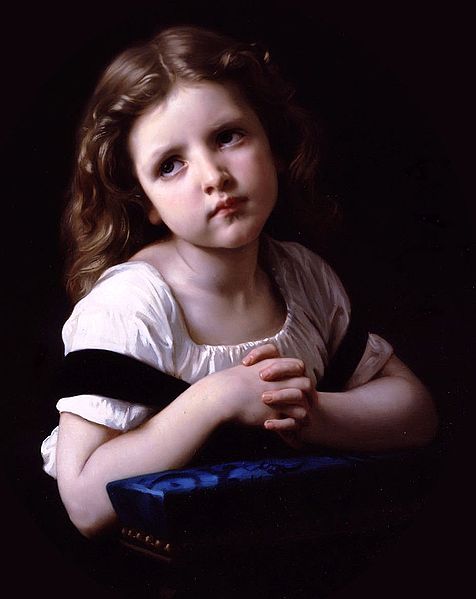
File:William-Adolphe Bouguereau (1825-1905) - The Prayer (1865) (cropped).jpg
The Prayer by William-Adolphe Bouguereau (Photo courtesy of Wikimedia Commons).


A few years ago at Mass in another diocese, the priest began a homily on the importance of daily prayer. I was elated. We hear this far too seldom from the pulpit. My elation soon turned to disappointment, however. He talked about being aware of the world around you, and your own thoughts and feelings. Shockingly, he didn’t mention God at all! I realized the priest (apparently without knowing it) was not really advocating prayer, but a Buddhist-inspired form of meditation.

Both Christians and Buddhists use the term “meditation,” so it’s no wonder sincere people confuse the practices of the separate religions. But they are quite different.

Christian meditation centers on Christ


In Crossing the Threshold of Hope, Pope John Paul II noted that Buddhists seek to free themselves from the world, while Christians seek freedom from sin, through God’s grace, in order to be united with Him. Eastern meditation might relieve stress, but it cannot save souls.
Doctor of Prayer St. Teresa of Avila gives us further insight, when she writes in the 1st chapter of Interior Castle :

“If a person neither considers to Whom he is addressing himself, what he asks, nor what he is who ventures to speak to God, although his lips may utter many words, I do not call it prayer.”

In other words, true prayer recognizes how small and sinful we are and how great God is, and addresses itself towards Him. Eastern forms of meditation are not addressed to anyone.  The question of God’s existence and character doesn’t come into play.

Prayer’s purpose is union with God


Front Cover

Christian prayer is communication with God. The conversation we have in prayer goes both ways. In fact, God’s action during prayer is more important than our words, thoughts, or feelings.  Prayer is a search for God, who promises, “You will seek me and find me; when you seek me with all your heart, I will be found by you” (Jeremiah 29:13-14). As the Song of Songs envisions it, prayer is the Beloved seeking the One who loves her. This seeking (and finding!) is the purpose of our lives. You and I were made for intimate union with God. God is love, and He invites us to share in the very love that unites the Holy Trinity. The means to this union is prayer.

Union with God unfolds in stages. When we first start praying, we have to work hard to focus on God, to meditate on (that is, ponder) His goodness, and to worship Him. Faithfulness to prayer and to God’s will opens the door to the gift of contemplation, when God secretly transforms us and draws us closer to Himself. The early stages of prayer are concerned with seeking, the later stages with finding.

Non-Christian meditation aims too low. It cannot fulfill our longing for eternal love. Do not be afraid to lift your sights higher. Do not be afraid to seek the face of God in prayer!


Share with us: How have you or others around you misunderstood the purpose of Christian prayer? What insights from your own growth in prayer can you share?

This was originally posted at Contemplative Homeschool.