Our Members' Blogs

Showing posts with label Michael Incorvia. Show all posts

Wednesday, March 12, 2014

Glory in the Lord alone

 By Michael Incorvia


Chapelle Royale Versailles Wikimedia Commons
Chapelle Royale, Versailles
(Wikimedia Commons)


Jeremiah gives a beautiful description of how to live and practice our faith: Thus says the LORD: “Let not the wise man glory in his wisdom, let not the mighty man glory in his might, let not the rich man glory in his riches; but let him who glories glory in this, that he understands and knows me, that I am the LORD who practice steadfast love, justice, and righteousness in the earth; for in these things I delight, says the LORD.” (Jeremiah 9:23-24)

Many say these two verses of Jeremiah define the basis of our faith and religion — steadfast love of God and neighbor, the proper exercise of justice, and righteousness.  For the LORD blesses those “who observe justice, who do righteousness at all times” (Psalms 106:3), for the LORD “loves righteousness and justice” (Psalms 33:5) and “hate[s] wickedness” (Psalms 45:7).


Continue reading at Michael's blog To Love and Truth.

Tuesday, March 4, 2014

The call of a humble heart

By Michael Incorvia


Madonna of Humility Sassetta - Wikimedia Commons
Madonna of Humility by Sasseta
(Wikimedia Commons)


The Lord hears and responds to the call of a humble heart. Call on Him with confidence and courage.

The Lord seeks and desires a heart free of self and the world, for a heart burdened with self and the world cannot bind itself to God.

The Lord helps and protects the meek and humble of heart. Lovingly, He provides what is needed to serve Him, strengths the will with grace to embrace the cross, and joins those of humble heart to the mystical body of His Son, Christ Jesus.

Trust in the mercy and goodness of the Lord fearlessly.


Michael blogs at To Love and Truth.

Wednesday, February 19, 2014

In your mouth and in your heart

By Michael Incorvia


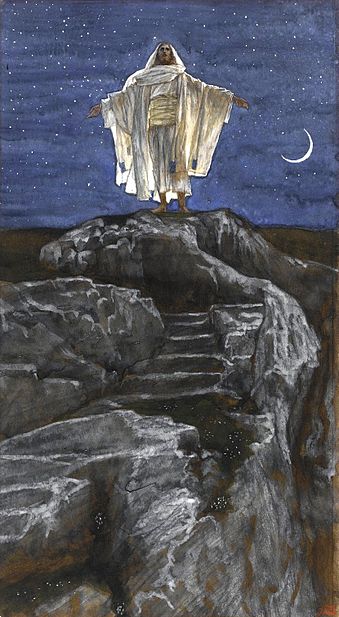
File:Brooklyn Museum - Jesus Goes Up Alone onto a Mountain to Pray (JƩsus monte seul sur une montagne pour prier) - James Tissot - overall.jpg
Jesus Goes Alone Up On a Mountain
to Pray
by Tissot (Wikimedia Commons)


Prayer consists in having the Lord not only near in mouth, but also near in heart.  “For out of the abundance of the heart the mouth speaks” (Matthew 12:34).


Prayer does not comprise one empty phrase heaped upon another.  Rather, prayer is the mouth proclaiming phrases that proceed from the heart.  The heartfelt phrases may be in the form of petitions and complaints, acclamations of praise and glory, and declarations of faith and hope.  During prayer, the heart should also be still and listen.

The Patriarchs, Prophets, and Psalmists entered into such fervent dialogue with the Lord.  The Gospels are similarly filled with such prayerful dialogue between Jesus and His Father in Heaven.


Michael blogs at  To Love and Truth.

Friday, February 7, 2014

Are you entangled in passing things?

By Michael Incorvia


JosĆ© Ferraz de Almeida JĆŗnior Scene of Adolfo Pinto’s Family Wikimedia Commons
José Ferraz de Almeida Júnior
Scene of Adolfo Pinto’s Family
Wikimedia Commons


St. John of Avila noted in a letter: Say in your heart, “I am being led captive to death; what is this world to me? I am going to God; I do not wish to entangle myself in earthly things.”

Matters of the day and concerns of life are to be dealt with, but should not divert attention from the ultimate goal, drawing nearer to God through service to Him.   God works in us bear fruit when the will is turned away from self and to God.   Life should consist of drawing ever nearer to God; thanking the Lord for what He has asked us to bear, and ever contemplating the Father, Son, and Holy Spirit.   We can perform small acts in service of God, and God can speak and work through small events in our life.  Be ever attentive to the presence of the Lord, for He is continually present to us.


Michael blogs at To Love and Truth.

Saturday, February 1, 2014

Eating cultural pork

By Michael Incorvia


Maccbees Courtesy Wikimedia Commons
Maccabees from Wikimedia Commons.


Sometimes an event will linger with me throughout the day, into the next.  Yesterday, I had such an event.  It was the Old Testament reading at mass, 2 Maccabees.

The passage was about a prominent scribe, Eleazar, who Syrians agents were trying to force to eat pork.  The Syrians were occupying Israel, and decreed Israel abandon her Jewish culture and adapt the culture of the Greeks.  The agents presented Eleazar with face saving ways.  For example, Eleazar could provide the meat himself, so that it would only appear like he ate pork.  But Elearzar declined.  He realized that such an appearance would present scandal, particularly to the young.  The passage is included below for those who would like to read it in its entirety.

Each of us will be presented with situations to eat the pork of the culture.  Will we like Eleazar decline to partake of the cultural pork?  Will our actions present scandal, or not?


Read the passage at Michael's blog To Love and Truth.

Saturday, January 25, 2014

Do you have a personal relationship with God's people?

By Michael Incorvia


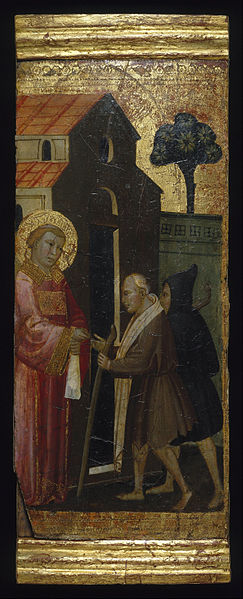
File:Lorenzo di Niccolò - Saint Lawrence Distributing Alms to the Poor - Google Art Project.jpg
St. Lawrence giving alms to the poor
(photo: Wikimedia Commons)


Faith is more than a personal relationship with God; faith is a personal relationship with God and His people.

Jesus preached a faith where: “You shall love the Lord your God with all your heart, and with all your soul, and with all your mind. This is the great and first commandment.  And a second is like it, you shall love your neighbor as yourself.” (Matthew 22:34-39, Mark 12:28-34, and Luke 10:25-28) And where is our neighbor to be found?  Our neighbor is found in the hungry, the thirsty, the stranger, the naked, the sick, and the imprisoned (Matthew 25:35-36).

As Jesus indicated, “On these two commandments depend all the law and the prophets.” (Matthew 22:40)  The inability of Israel and Judah to follow these two commandments was part of God’s indictment against them (see for example Amos, Hosea, Isaiah, Joel and Micah), which, in part, lead to their exile.

These two commandments have been and will continue to be fundamental to a relationship with God.  For this reason faith is not only a relationship with God, it is a relationship with God and His people.


Michael blogs at To Love and Truth.

Tuesday, January 7, 2014

How do the righteous live?

 By Michael Incorvia


The Prophet Habakkuk Wikimedia Commons
The Prophet Habakkuk (photo: Wikimedia Commons).


The Old and New Testaments teach that the righteous person lives by faith, freely committing their entire self to God, seeking only to know and do God’s will.

God’s reply to the plea of the Old Testament Prophet Habakkuk is, “the righteous shall live by his faith” (Habakkuk 2:4b).   And, in the New Testament the author of Hebrews teaches that God states, “my righteous one shall live by faith, and if he shrinks back, my soul has no pleasure in him” (Hebrews 10:38).

It is through a total surrendering of self to God, desiring only to know and do His will that a righteous life is lived.   Righteousness is not achieved in a singular act of surrendering to the Lord.  Rather, righteous is achieved through series of daily actions of surrendering self to God, to know and do God’s will.  The righteous entrust their state in life, each event in the life, their entire being to the Lord.  Eternal salvation is achieved through a life lived in faith.


Michael blogs at To Love and Truth.

Wednesday, January 1, 2014

In praise of family life

By Michael Incorvia


Courtesy Wikimedia Commons
Photo courtesy of Wikimedia Commons.


The activities of family life can be overwhelming.   Man was created not to be overwhelmed by family life, but to be overwhelmed by God’s love and to embrace family life in union with God.

God instituted the family as a domestic church to reflect his covenantal relationship, to be co-creative with him, and to drawn all to him.  These are the critical aspects of family life.

To the domestic church God bequeathed, through the marital union, the ability to be co-creative in union with him and bring new life into the world.  To shun this co-reactive aspect of the marital union is to shun God, his creation, and his love for mankind.  The covenantal relationship of the marital union makes no sense if the co-creative aspect of the marital union is absent.


Continue reading at Micheal's blog To Love and Truth.

Friday, December 27, 2013

The four benefits of faith

By Michael Incorvia


Fra Angelico Wikimedia Commons
Painting by Fra Angelico (photo credit: Wikimedia Commons).


St. Thomas Aquinas teaches that faith confers four benefits, faith: unites the soul with God; introduces the soul to eternal life; guides the present life; and helps overcome temptation.

The soul is wedded to God through faith, for “I will espouse you in faithfulness” (Hosea 2:20).  A soul lacking faith is not acceptable to the Lord, “for whatever does not proceed from faith is sin” (Romans 14:23), “[a]nd without faith it is impossible to please him, for whoever would draw near to God must believe that he exists and that he rewards those who seek him” (Hebrews 10:6).

Knowledge of God is obtained through faith and eternal life is achieved through knowing God, for “this is eternal life, that they know you the only true God, and Jesus Christ whom you have sent” (John 17:3).


Read the rest at Michael's blog To Love and Truth.

Friday, December 13, 2013

Worship God with your life

By Michael Incorvia


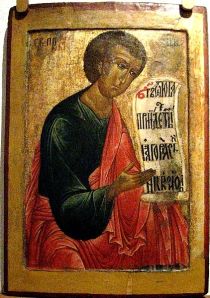
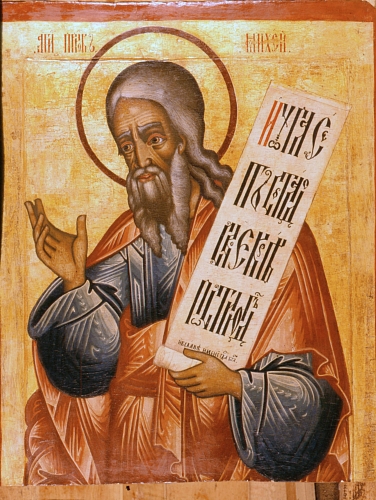
File:Micah prophet.jpg
Micah the Prophet (photo credit: Wikimedia Commons).


God has revealed the type of worship He desires, worship carried out in how we live our life.   Worship is not only the words we pray, it is also the actions we take throughout each day.

In 1 Samuel (15:22) we learn: “Has the Lord as great delight in burnt offerings and sacrifices, as in obeying the voice of the Lord? Behold, to obey is better than sacrifice, and to hearken than the fat of rams.”  This is not to say that the God condemns sacrifices, but that the God finds obedience better.

The Prophets further echo the Lord’s desire of a life lived in obedience:

“For I desire steadfast love and not sacrifice, the knowledge of God, rather than burnt offerings.” (Hosea 6:6); and

“With what shall I come before the Lord, and bow myself before God on high? Shall I come before him with burnt offerings, with calves a year old? Will the Lord be pleased with thousands of rams, with ten thousands of rivers of oil? Shall I give my first-born for my transgression, the fruit of my body for the sin of my soul?” He has showed you, O man, what is good; and what does the LORD require of you but to do justice, and to love kindness, and to walk humbly with your God?” (Micah 6:6-68)


Continue reading at Micheal's blog To Love and Truth.

Friday, November 8, 2013

Marriage, abortion, the Holy Spirit, and the Church

By Michael Incorvia


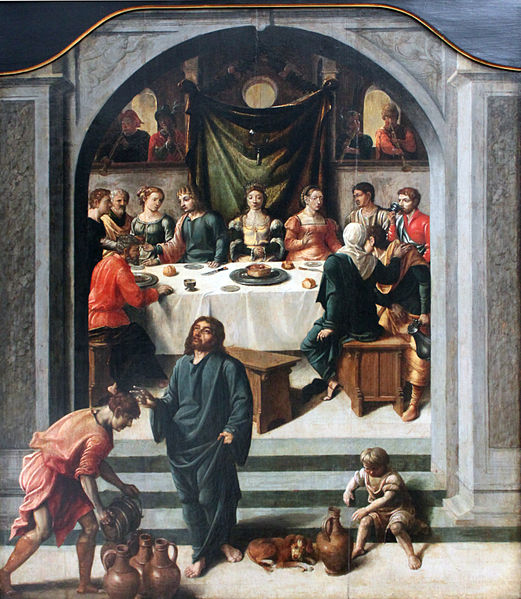
File:1550 van Groningen Die Hochzeit zu Kana anagoria.JPG
The Weeding at Cana by Van Groningen (Wikimedia Commons).


The Bible begins with a wedding and ends with a wedding reception.  Genesis, the first book of the Bible opens with a marriage, the wedding of Adam and Eve and God’s command to the couple to be fruitful and multiply.  The Bible concludes with the Book of Revelation and the wedding feast of the Lamb of God to His bride, the Church.   The Bible is rife with marriage imagery and the fruit it bares, love and life.

Out of love, God created man and woman.  The depth of God’s love for His people and Church is expressed in terms of the love shared between a husband and wife.  As a husband and wife surrender themselves to one another, God invites us to surrender ourselves to Him in love.  Similarly, our unfaithfulness to God is expressed in terms of spousal infidelity.


Continue reading at Michael's blog To Love and Truth.

Thursday, October 31, 2013

How is your courtship with God?

By Michael Incorvia


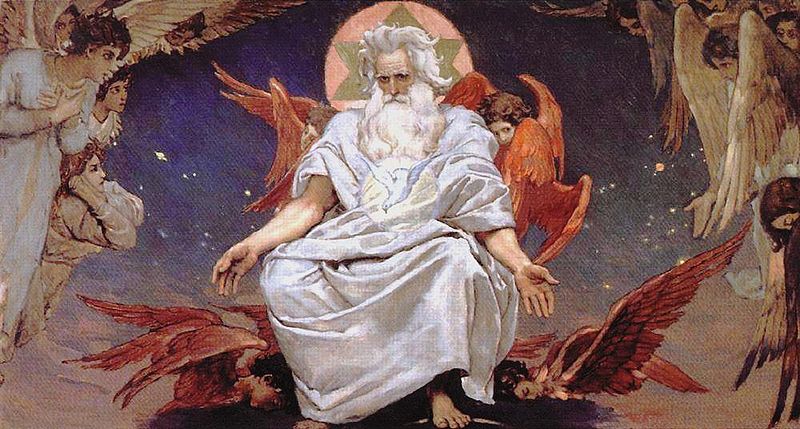
File:Бог Даваоф.jpg
God the Father, artist unknown (photo credit: Wikimedia Commons).


Prayer, a time set aside to engage and know God and for God to engage and know us.  Throughout the Old and New Testaments God represents His relationship with His people as a spousal relationship.  Prayer can be viewed as a type of courtship leading to a spousal relationship with God.  Prayer can be a period of excitement and anticipation, a period that leads to betrothal and marriage.

What is our courtship of God like?   Is our prayer time dominated with the wants and needs we desire from the relationship?   Or, is it a time spent listening and learning what God desires in us as a spouse?   Does our prayer reveal our true self?  Or, do we present a false image of who we are?  Comfort should be taken that God loves us as He created us, not how we try to remake ourselves.

Is our prayer time a casual time, a time convenience?  Or, a time reserved for God, free of distractions, a precious time reserved for our future spouse, a time revered, a time looked forward with anticipation and joy?


Michael originally posted this at his blog To Love and Truth.

Friday, September 27, 2013

Our hearts are forever restless

By Michael Incorvia


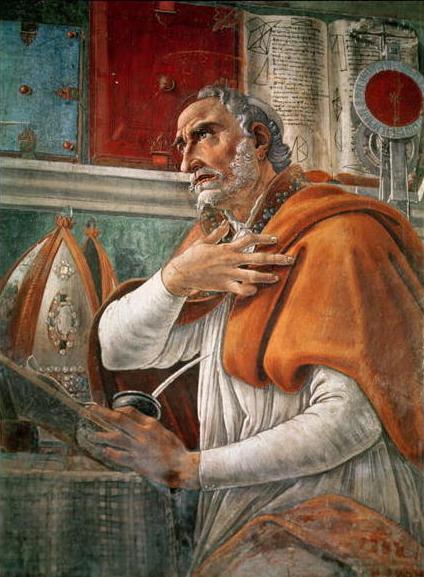
File:Saint Augustine Portrait.jpg
St. Augustine by Botticelli (photo credit: Wikipedia).


The heart desires to know truth.  In some endeavors, when knowledge is attained, the heart is satisfied and can rest.

In the endeavor to known God, the heart is forever restless.  For the desire to know God is written on the human heart by God, but full knowledge of God can never be realized.  For how can the finite contain, comprehend, or possess the infinite?  How can the imperfect, fully appreciate the perfect?

God continually reveals Himself to the seeking heart with eyes that seek to see Him and ears that desire to listen to His words.  The heart hopes to gain knowledge and possession of what it desires through its relentless seeking of God.  It is through hope that faith is perfected.  As is so eloquently stated in Hebrews (11:1), “Now faith is the assurance of things hoped for, the conviction of things not seen.”


Michael originally wrote this on his blog To Love and Truth.

Saturday, August 31, 2013

Don't be afraid to approach God

 By Michael Incorvia


St. Thérèse at 13 years
St. Therese at age 13 (photo credit: Wikipedia).


More fearful than standing before a large audience to deliver a speech, is standing before God.  We fear being found unworthy and sinful.  We need only look to the Gospels to dispel our fears.  Christ welcomed all to approach who felt unworthy because of their state in life or sinfulness.   They needed only call out His name or beg His mercy to approach and be healed.

St. ThĆ©rĆØse teaches that we should have complete trust in the merciful love of Jesus.  His divine heart is irresistibly inclined to pour out its mercy without measure on the abject and the lowly.

We are to approach Christ in “trustful humility” with our sinfulness, brokenness, and imperfections before us.  Through His mercy our sins will be forgiven, our brokenness healed, and our imperfections refined.

In “trustful humility” we should offer ourselves as an “empty vessel” to be filled with the love of God and ultimately absorbed in love in Him.  We should never fear His loving mercy.  We should approach unhindered, to embrace His merciful love.


Michael blogs at  To Love and Truth.

Sunday, July 28, 2013

The babe leaped in her womb

by Michael Incorvia


File:Thalheimer Retabel Aussenseite.jpg
Thalheimer Altar (photo credit: Wikimedia Commons).


"The babe leaped in her womb" (Luke 1:41) is a verse that I frequently prayerfully meditate on.  John the Baptist leaped in Elizabeth’s womb when he encountered Christ veiled in the womb of the Blessed Mother.  I prayerfully mediate on my struggle to see Christ in all who I encounter.  It is not easy to see Christ in those who cause discomfort in my life.  But, they are ones who bring opportunities to encounter and to be comforted by Christ.

Initially, encounters with Christ may not be comforting.  To approach Christ we must acknowledge our sinfulness and surrender self to follow Him.

It is difficult to see Christ in those who make us face our prideful, self-centeredness.   But, is it not Christ who scatters “the proud in the imagination of their hearts” (Luke 1:51)?  Is it not also Christ who will  “put down the mighty from their thrones, and exalted those of low degree” and who will “filled the hungry with good things, and the rich he has sent empty away” (Luke 1:52-53)?

Christ is present in those who challenge us to step outside of prideful, self-centeredness, to extend mercy to those in need; to think of another instead of self; to be humble and meek and not prideful when dealing with others; and to share what has been freely given with others.  Oh, the number of opportunities lost each day to encounter Christ!


Michael originally posted this at his blog  To Love and Truth.