Our Members' Blogs

Showing posts with label Prayer. Show all posts

Thursday, November 6, 2014

Retreats: a small cell to meet with God

By Carlos X.


Christ’s prayer in the Garden of Gethsemane on the eve of His crucifixion is poignant because of its devastating description of the agony of the Lord as He was about to make His ultimate sacrifice.  His fleeting fancy, “If it is possible, let this cup pass” and subsequent, solemn affirmation, “If this cup cannot pass by me, but I must drink it, your will be done” (St. Matthew 26:42), is a powerful testament to Christ’s love for humanity and obedience to the will of God.  It is also an important illustration of the value of the spiritual retreat as a source of fortitude in Christian life.

Archbishop Óscar A. Romero of El Salvador is said to have had his moment in the Garden during a spiritual retreat just weeks before his March 1980 assassination.  I want this retreat to join me more closely to His will,” Romero wrote in his notes for that retreat.  Romero was an enthusiastic advocate of spiritual retreats.  In everyone’s heart there is, as it were, a small intimate cell where God is able to speak with everyone individually,” he had preached to his flock upon taking up his ministry three years before.  If every one of us who are so concerned about so many different problems and situations were to enter this ‘small cell’ and from there listen to the voice of the Lord who speaks to us in our conscience, how much more would we be able to do to better our situation and the situation of our society and family,” he said.
 
Continue reading at Carlos' blog Super Martyrio.

Wednesday, October 15, 2014

From mystical premonition to contemplation

By David Torkington


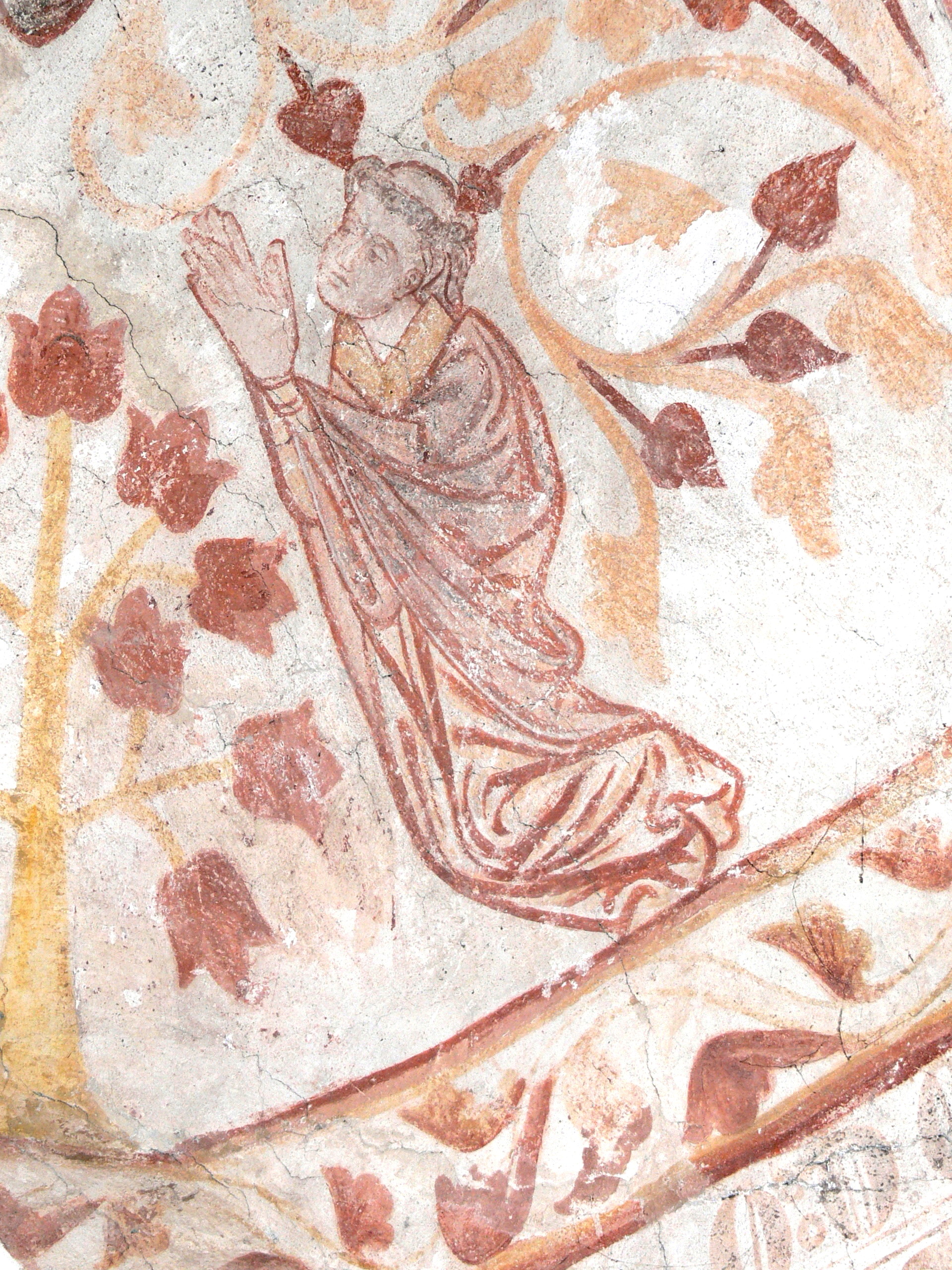
http://upload.wikimedia.org/wikipedia/commons/1/12/N%C3%B8rre_Alslev_kirke_-_Apsis_-_Stifter.jpg 


Sometime ago I was speaking about what I called Mystical premonition or touches of God when one of the audience asked “Are we talking about something that is a particularly Christian experience, or does everyone experience God’s touch?”

“It’s for everyone,” I replied emphatically. “God loves everyone, not just Christians, but Christians do respond in a unique way.” Let me explain what I mean. Long before he became a saint, when he was still a pagan, St Augustine experienced those ‘touches of God’. In writing about the way he reacted to them in his Confessions he gives us a perfect example of how we should react too, in order to deepen our spiritual life.

From his Confessions: -

“When first I knew you, you lifted me up so that I might see that there was something to see, but that I was not yet the man to see it. And you beat back the weakness of my gaze, blazing upon me too strongly, and I was shaken with love and with dread. You called and cried to me and broke open my deafness and you sent forth your beams and shone upon me and chased away my blindness. You breathed fragrance upon me, and I drew in my breath, and do now pant for you. I tasted you, and now hunger and thirst for you. You touched me, and I have burned for your peace. So I set about finding a way to gain the strength that was necessary for enjoying you. And I could not find it until I embraced the mediator between God and man, the man Christ Jesus, who was calling unto me and saying, ‘I am the way, the truth, and the life’.”

Continue reading at David Torkington.

Friday, September 26, 2014

Honest prayer

By Melanie Jean Juneau


Real prayer
Is not a mental exercise, a game.
Honest prayer
Opens our core, our heart to the Almighty,
The Creator of the universe.
Such prayer is necessarily humble because
He is God and we are not.
No room for pride;
He knows us better than we know ourselves.

Continue reading at Melanie's blog joyofnine9.

Friday, September 19, 2014

Slaves (Esclavos)

By Lora Goulet
Madonna by Herman Richir
(Wikimeida Commons)
When we are slaves to worry,
Our Most Blessed Virgin Mother
Leads us into the Presence of Jesus,
The only One Who can free us.
And when our loved ones are enslaved by fear, 
The prayerful encouragement of Our Lady
Helps us to be a Saint Peter Claver for them.

Cuando somos esclavos de las preocupaciones, 
Nuestra Santísima Virgen Madre
Nos lleva a la Presencia de Jesús,
El Unico que nos puede liberar.
Y cuando nuestros seres queridos están esclavizados por el miedo 
El aliento orante de Nuestra Señora
Nos ayuda ser el San Pedro Claver  para ellos.

Hail Mary, full of grace
The Lord is with thee
Blessed art thou among women
And blessed is the fruit of thy womb,Jesus.
Holy Mary, mother of God
Pray for us sinners, now,
And at the hour of our death. Amen.

Dios te salve María, llena eres de gracia, 
el Señor es contigo. 
Bendita tú eres entre todas las mujeres 
y bendito es el fruto de tu vientre, Jesús. 
Santa María Madre de Dios, 
ruega por nosotros los pecadores, 
ahora y en la hora de nuestra muerte. Amen.

Lora originally wrote this for her blog mommynovenas.

Friday, September 5, 2014

Should we sit quietly during prayer? (Part 1 of 3)

By Connie Rossini 


A Hermit Praying in the Ruins of a Roman Temple by Hubert Robert


Last week I wrote about St. Teresa’s of Avila’s method of mental prayer. Today I want to discuss misunderstandings about prayer from a different angle. Since we desire contemplation, should we sit still in prayer and wait for it? Should we try to make it happen by quieting our minds? Like last Friday’s post, this series speaks to the differences between Carmelite teaching and Centering Prayer, yoga, and other types of meditation influenced by eastern religions.

Some people falsely equate silence with supernatural (infused) contemplation. They read about the need for interior silence in prayer, and they mistakenly think that if they sit quietly, God will necessarily bestow contemplation upon them. They equate the peace they find in silence to communion with God.

The Vatican has cautioned us about certain methods of prayer

In 1989, Cardinal Joseph Ratzinger (later Pope Benedict XVI), as head of the Congregation for the Doctrine of the Faith, wrote Letter to the Bishops of the Catholic Church on Some Aspects of Christian Meditation. Here is what the document says about silence:
Similar methods of meditation, on the other hand, including those which have their starting-point in the words and deeds of Jesus, try as far as possible to put aside everything that is worldly, sense perceptible or conceptually limited. It is thus an attempt to ascend to or immerse oneself in the sphere of the divine, which, as such, is neither terrestrial, sense-perceptible nor capable of conceptualization.” (11)

Continue reading at Contemplative Homeschool.

Friday, August 29, 2014

Did Teresa of Avila teach Centering Payer?

By Connie Rossini


St. Teresa's Transverberation by Joefa de Obidos (Wikimedia Commons)


Last winter on social media, I came across another Catholic author who was promoting yoga. Not as an exercise program, but for spiritual growth. I was shocked. I asked her why she wasn’t promoting prayer instead. She answered, “Meditation is prayer!”

Nope.

Two months ago, my brother forwarded an email from a colleague, asking about Centering Prayer. A friend was pushing it relentlessly. I looked at the website of the Catholic group that promotes Centering Prayer and found this in the FAQs:
This form of prayer was first practiced and taught by the Desert Fathers of Egypt … the Carmelites St. Teresa of Avila, St. John of the Cross and St. Therese of Lisieux…

Nonsense.

The other day a new reader asked in the comments about meditating on Sacred Scripture. “Is this the same as the method of Fr. John Main, who has adapted an Eastern mantra method for Christian meditation?”

Uh-uh.

I have written a little on this topic before, but I think it’s time to revisit it. Let’s start with Teresa of Avila.


Continue reading at Connie's blog Contemplative Homeschool.

Friday, August 22, 2014

A weary mama's morning offering

By Jaime Cheaney

Dear Jesus, I offer you my sufferings today.  The lack of sleep, messy house, never-ending laundry, marathon nursing sessions, and squabbling children.  I especially offer up the feeling that I am failing as a parent.  I entrust myself and my entire family to your care, knowing You are in control.

Please unite my sufferings with Yours on the cross, using them to bring others to know You.  Please comfort those who pray for a baby, those who mourn the loss of a child, and the neglected children unloved by anyone but You.


Crucifixion


Jesus, I thank you for every late night teenage heart-to-heart, every sloppy kiss and snuggle, and even the constant busyness.  Every day with my family is a gift.  Please give me Your heart and Mother Mary’s simple yes to Your will.  Guide me as I teach this to my children.
In Jesus’ name, I pray.  Amen.

**The picture above is one of my favorites.  I took it standing at the foot of the crucifix statue at the Black Madonna Shrine in Eureka, Missouri.

Jaime blog at Fruitful Mama.

Saturday, July 19, 2014

Vacation meditation

By Carlos X.

St. Damien, before he set off for Hawaii (Wikipedia).


Staring intently at the sun setting behind Molokai, from Maui, where I was on vacation with my family this summer, was, for me, a religious experience (the two Hawaiian islands are only 7.5 miles apart).  The sunset has since time immemorial been a spiritual hour for Christians: the Vespers have been recited at this time since at least the 4th century; the glorious refraction of the sun’s light across the sky creates a natural stained glass window, and the fall of darkness recalls the hour of the death on the Cross.  Going on vacation can take us out of our normal schedule, threatening to disrupt our prayer life.<  But powerful moments such as the sunset—which happens every day, and being on vacation may leave us more at liberty to observe—can provide an opportunity to keep up our prayer life and indeed enrich it.

One way to seize upon such unplanned and unexpected moments is meditation—that “freestyle” form of conversation with God, which differs from regular prayer in that prayer attempts to articulate in words our needs and praise, while meditation “engages thought, imagination, emotion, and desire.” 
[Catechism of the Catholic Church, §2708.]  It is often said that meditation in the Christian sense involves an active process—engaging the mind through thought, imagery, reflection, etc.—whereas “eastern” forms of meditation often involve “emptying” oneself of these.  Catholics may turn to these other techniques for “a path to interior peace and psychic balance,” but they are not effective substitutes for prayer. [Letter to the Bishops on Some Aspects of Christian Meditation, Congregation for the Doctrine of the Faith, J. Ratzinger, Prefect, 1989.]  Christian prayer should go further: to the knowledge of the love of the Lord Jesus, to union with Him.”  [Catechism, supra.]
Continue reading at Carlos' blog Super Martyrio.

Wednesday, June 25, 2014

The first prayer that Jesus learned

By David Torkington


File:Pierre-Édouard Frère - Interior with Woman Teaching Child to Pray - Walters 371404.jpg
Interior with Woman Teaching a Child to Pray
by Frere (Wikimedia Commons)


The first prayer that Jesus would have learnt from his mother, like all other Jewish children, was called the ‘Shema Israel, part act of faith, part prayer. Its first words proclaimed belief in the One God who should be loved ‘with the whole heart and mind and with one’s whole strength’. This embodied the essence of Jewish wisdom that Jesus had come to bring to perfection.

The ‘Shema’ was the first prayer to be said on the Sabbath in the synagogue where it was also said three times a day to coincide with the sacrifices made in the Temple. For those who were unable to go to the Synagogue, it was said at work, in the fields, or at home, so that the whole day would be dedicated to the love of God.

Although this was the linchpin of daily prayer for the Jews it was surrounded with other prayers, like the prayers said on rising in the morning and before going to bed at night, before, during, and after eating, making the whole day into one long and enduring prayer to God, that sanctified everything that was said and done.


Continue reading on David's blog David Torkington.

Tuesday, June 24, 2014

Ask, seek, knock, be present

By Robert Batch


occupy-ad

Ask, and it will be given to you; seek, and you will find, knock, and it will be opened to you.  For everyone who asks, receives, and he who seeks finds, and to him who knocks it will be opened.

It is hard in today’s culture to really grasp these three steps.  Ask, someone that is not present to us. Seek someone that we cannot see.  Finally Knock, to be answered by someone we don’t even see!

None of us can entirely attain to these lofty ideals, but I will say this that the Lord knows where are hearts are tender and sincere before him, especially in the Eucharist.  I have made it a personal habit to go to the Adoration Chapel every night after work simply to be in His presence.  The amount of grace that you receive by simply being in his presence is something that you can only experience if you truly seek the Lord in the Eucharist.

On this Feast of the Body of Christ, I encourage you to try and find some time during your week to simply seek the Lord in the presence of Him in the Blessed Sacrament.  You never know what the Lord might give you, and you never know what door might open in your life.

What are you waiting for…Go!

Robert originally posted this at his blog Love is Calling.

Friday, May 30, 2014

Jesus cleanses the leper

By Barbara A. Schoeneberger


  Jesus Cleanses the Leper


My Ignatius Study Bible and the “Gospels in a Year” adventure at Flocknote  are exciting tools to help me know the Lord all the better. If you aren’t signed up yet, try it out. I’m loving it.

Jesus Cleanses the Leper

Some weeks back our study for the day was Matthew 8:1-13. I wanted to write about it then but didn’t get to it. Then the same passages came up for the Gospel of the Third Sunday after Epiphany a couple of weeks ago and again, the story kept tugging at me. The image of the leper is so touching I can’t get it out of my mind, as he is the symbol of the sin-sick soul we hear about in the beautiful American Spiritual, “There is a Balm in Gilead”. This is a beautiful tale of faith.
Matthew 8:1: When he came down from the mountain, great crowds followed Him.
Jesus always withdrew to the high place, a mountain, to pray to His Father.  Mountains symbolize the dwelling place of God. This is where Moses and the prophets often conversed with God, and where God gave commands and instructions to them. After dealing with the crowds, Jesus went to the heights for peace and quiet and to “recharge his batteries” if you will. Our mountains are the quiet places we go when we want to pray – the Adoration chapel or church, the home altar, a chair in the back yard, on the porch, or on the balcony, a peaceful place in the woods, anywhere we can be alone with God. Before we undertake any great work, a conversation with the Father will give us strength just as it did Christ.


Continue reading at Barbara's blog Suffering With Joy.

Monday, May 19, 2014

A heart that prays

By Beryl Baterina
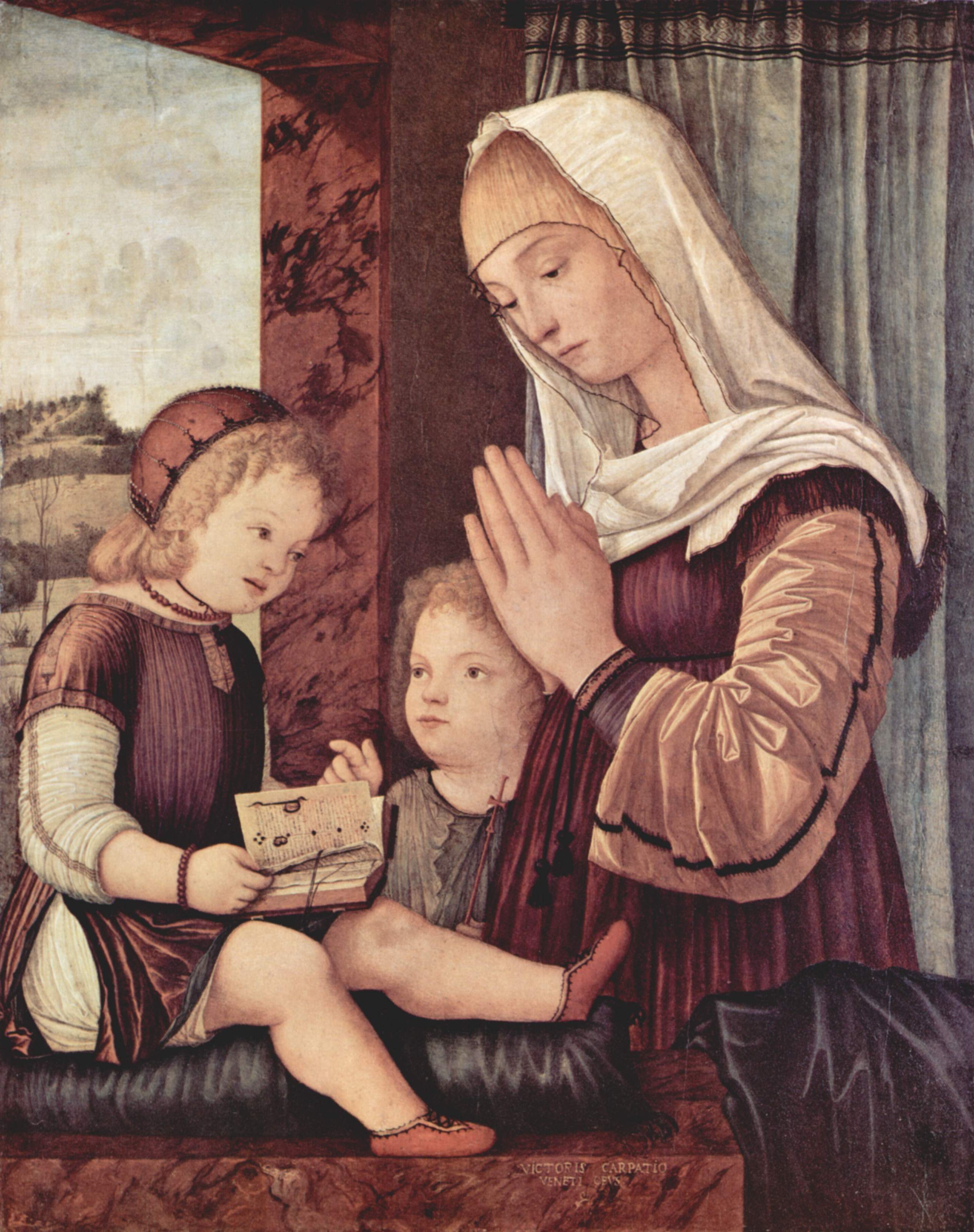
http://upload.wikimedia.org/wikipedia/commons/5/50/Vittore_Carpaccio_067.jpg
Painting by Carpaccio (Wikipedia).
 
We, humans cannot be contented with what we have.  We have this unending desire to seek for more.  We want to aim higher and higher.  Well, there is nothing wrong with that.  In fact, it is good that we have goals to keep pushing ourselves.  And we pray to God to grant us our desires.  We pray that we may be able to land at this job, to pass this test, to be like this and that, and many other more.  There are times when we demand of God, "You said, 'Ask and you will receive.'We have faith but You did not answer our prayers."  That can be a factor why there are many people who do not have faith in God anymore.  They were devastated with the "broken promises" of God.

But it should not be the case.  "You ask but do not receive, because you ask wrongly."  God answers our prayers in a way that is best for us.  We must not be mad at God thinking that He is not really answering our prayers.  We must not turn our backs  from prayers because of this.  We must reflect on how we pray to God.  Do we pray just for the compliance of praying?  Or do we pray with our hearts open and complete surrender before the Lord?  Do we pray like, "Lord, give me this, I should be like that..." or anything similar to that?  Or do we pray like, "Lord, I am not worthy that I should be asking this.  But if it is Your will, I will really be grateful.  I ask You O Lord to please..." and other prayers like that?

Let us try to recall how we prayed when we were still kids.  But if it is too hard to remember, let us ask children how they pray.  Maybe we can reflect on their answers.  Maybe we will also be able to remember how we prayed when we were younger.  Or better yet, we will remember how God answered our prayers from when we were still kids until we grew older.

We must not cease in our prayer life.  We should continue to be humble and keep our faith as we ask for God's grace.

 Beryl originally wrote this post at Beryl Baterina: Daily Dose.

Saturday, May 3, 2014

Wisdom in prayer

By Beryl Baterina


http://upload.wikimedia.org/wikipedia/commons/d/d2/William_Blake_-_The_Parable_of_the_Wise_and_Foolish_Virgins_-_Google_Art_Project.jpg
The Parable of the Wise and Foolish Virgins By Blake
(Wikimedia Commons).


"This kind can only come out through prayer.” 

Wisdom is God's gift and we can enhance this gift by learning and sharing it.  We can learn more from school, other people, and experiences.  We can share it by means of teaching, encouraging, or inspiring others.  Having the gift of wisdom does not give us the authority to be arrogant about it.  We must be humble and be grateful to the Lord for this gift.

We may excel in our daily jobs or activities but these are all because of God.  We must not be proud and arrogant thinking that it is because of our hardwork that we were able to achieve who we are today.  It is a blessing from God.  We must thank God for all the graces given to us.  And this is praying.  We  must learn to pray that we may be able to properly use these gifts from God.  Everything around us is wonderful and we must see the goodness in them.  We must have this habit of praying to God that we may use all the creation according to His plan.  Without prayer, these great gifts will not be useful to us.    


Continue reading at Beryl's blog Beryl Baterina.

Thursday, May 1, 2014

Praying the our Father: Thanksgiving

By David Torkington


File:Catacomb Via Latina Jacob ladder.jpg
Jacob's Ladder in the Via Latina Catacombs (Wikimedia Commons).


My earliest and happiest memories  are of going to visit my grandfather. It wasn’t because he played games with me, gave me  my favourite chocolate or even money to buy myself an ice cream on the way home, it was just because I  loved him. He  was such a lovable kindly man  that it was more than enough just to be with him and feel myself enveloped by his  love. This was before I even went to prep school. By the time I did he was dead  ‘though by today’s standards he was still a young man barely old enough to  draw his pension.

However he left me a legacy of love in his eldest daughter who was my mother.  She was the most loving mother one could wish for, who in spite of the dyslexia that blighted my early life enabled me to grow up with confidence and imbued with a security that only love can give.

I can still see  my grandfather in my imagination with a mop of  white hair and a moustache to match. I saw him over a year ago in my bathroom looking at me through the mirror. I was just raising my hand to shave the soap suds from under my nose that had left me with a white moustache and there he was looking back at me. I had never thought I looked like him before, never given it a second thought, but there he was looking back at me.  It  was undoubtedly him. The only trouble was the face that looked back at me wasn’t the kindly loving face that I remembered with such love, would that it were.


Continue reading at David's blog David Torkington.

Tuesday, April 22, 2014

A mystical maelstrom

By David Torkington


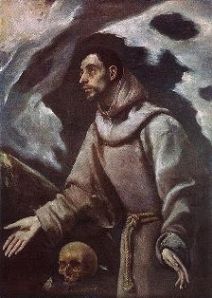
email large px-El_Greco_-_The_Ecstasy_of_St_Francis_-_WGA10458
The Ecstacy of St. Francis by El Greco
(Wikimedia Commons).


 When Christ came, it was to announce something that no other religion had ever  taught, nor any other religion taught since. Namely that the ultimate power, the ultimate energy the  infinite source of all creation, is not some impersonal super-power, but infinite love, no,  infinite loving.

Love cannot exist without a lover. Before time began, Christ was the recipient of his Father’s love. He was inextricably caught up in a mystical maelstrom of loving that flowed to and fro between him and his Father  from all eternity.

When human beings love, their love is both physical and spiritual, but God has no body, so he loves with his spirit alone. As a mark of respect therefore, tradition has taught us to call his loving,  The Holy Spirit. Jesus not only came to tell us this, but to enable us to receive this loving for ourselves. So when, after the Ascension he returned to where he had enjoyed his Father’s love before,  he returned not just as a divine being, but as a human being too.


Continue reading at David's blog David Torkington.

Tuesday, April 15, 2014

Facing temptations while fasting

By Lora Goulet


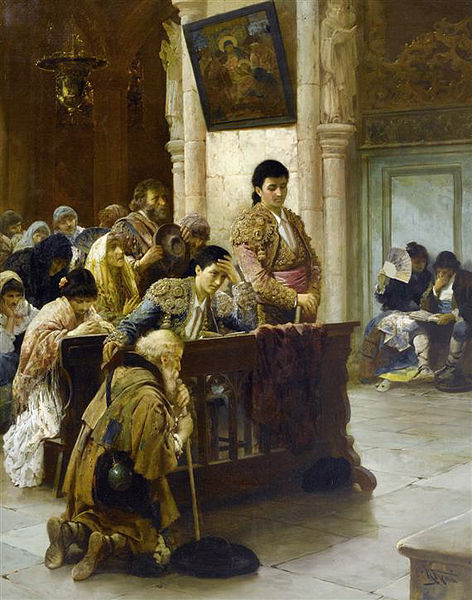
File:Robert Kemm Gebet vor dem Stierkampf.jpg
Painting by Robert Kemm (Wikimedia Commons).


Prayer and fasting cause a holy peace to flourish deep within our souls. Therefore, during a fast, it is not unusual for the evil one to attack with external (usually interpersonal) disruptions, provoking an internal "crankiness". Our obligation to forgive others coincides with a necessary examination of our own conscience.

Our hearts must be willing to repent. How humbling it is to confront that for which we require forgiveness! This can be more painful than the struggle against cravings for things of this world. We may even be tempted to give up praying and fasting. The strength to persevere comes from total reliance on Jesus. We are then free to experience the peace that comes from forgiveness and acceptance of God's will.  


"And Jesus said
'Father forgive them 
for they know not what they do.'"
Luke 23:34 
Douay Rheims Roman Catholic Bible


Lora has written a short series on prayer and fasting for Lent at her blog mommynovenas.

Tuesday, April 1, 2014

We're halfway there!

By Robert Batch


File:Bonnat Crucifixion.jpg
Christ's Crucifixion by Bonnat
Wikimedia Commons


Many of you are probably familiar with the song Living on a Prayer by Bon Jovi.  Some of you are probably too young, but I am going to make a safe guess that most of my audience knows the song pretty well from some type of wedding, or party or whatever it might have been.

I found this song title appropriate for this weekend, considering we have officially marked the halfway point for Lent.  Some people look at Lent as a time to give something up, and something people look at it as a time to do something extra that you may not have done prior.  Whatever your situation may be, it is obviously a challenge, and a task that we must offer up in prayer.

Bon Jovi in their second chorus says this:

We’ve got to hold on ready or not 
You live for the fight when it’s all that you’ve got 

Read the rest at Robert's blog Love is Calling.

Monday, March 31, 2014

Jesus cleanses the leper

By Barbara A. Schoeneberger


Jesus Cleanses the Leper


My Ignatius Study Bible and the “Gospels in a Year” adventure at Flocknote  are exciting tools to help me know the Lord all the better. If you aren’t signed up yet, try it out. I’m loving it.
Jesus Cleanses the Leper

Some weeks back our study for the day was Matt. 8:1-13. I wanted to write about it then but didn’t get to it. Then the same passages came up for the Gospel of the Third Sunday after Epiphany a couple of weeks ago and again, the story kept tugging at me. The image of the leper is so touching I can’t get it out of my mind, as he is the symbol of the sin-sick soul we hear about in the beautiful American Spiritual, “There is a Balm in Gilead”. This is a beautiful tale of faith.
Matt. 8:1: When he came down from the mountain, great crowds followed Him;
Jesus always withdrew to the high place, a mountain, to pray to His Father.  Mountains symbolize the dwelling place of God. This is where Moses and the prophets often conversed with God, and where God gave commands and instructions to them. After dealing with the crowds, Jesus went to the heights for peace and quiet and to “recharge his batteries” if you will.

Our mountains are the quiet places we go when we want to pray – the Adoration chapel or church, the home altar, a chair in the back yard, on the porch, or on the balcony, a peaceful place in the woods, anywhere we can be alone with God. Before we undertake any great work, a conversation with the Father will give us strength just as it did Christ.

Continue reading at Barb's blog Suffering With Joy.

Saturday, March 29, 2014

Contemplative Renewal

By Nancy Shuman


File:Ave Maria Grunwald.jpg
Ave Maria (Devotion) by Grunewald (photo: Wikimedia Commons)


I have long believed there is a kind of contemplative renewal occurring in the Church.  From where I sit, I see an ever growing body of evidence that this is indeed the case.  An increase of Eucharistic adoration... a re-focus on the Hearts of Jesus and Mary... an emphasis on Divine Mercy... interests in contemplative prayer and silent retreats.  So many things make me think this all has been growing, hidden, right in the midst of a world that seems increasingly more confused about the Truth of God.

This has not arrived with the fire and exuberance of some other renewal movements.  It grew in a quieter, more hidden way.  Like contemplative prayer itself, this is "infused."

One cannot make this sort of thing happen here or there or anywhere; one can only be a yes to God and make oneself available.  And one "yes" - one unconditional, unqualified yes to the will of God - can reverberate throughout the whole earth.  I believe we are seeing fruits of some of these yeses, this very day.

Tough times produce tough yeses. These yeses may not be spoken in the midst of great emotion.  They may be uttered in the pain of darkness, or with the sting of aridity, or with the apprehension of knowing that those who stand for the Truth of Christ are often scorned and looked down upon.  This in itself makes the yeses unconditional.
 

Continue reading at Nancy's blog The Cloistered Heart.

Friday, March 28, 2014

Can prayer and fasting solve your "unsolvable" problem?

By Lora Goulet


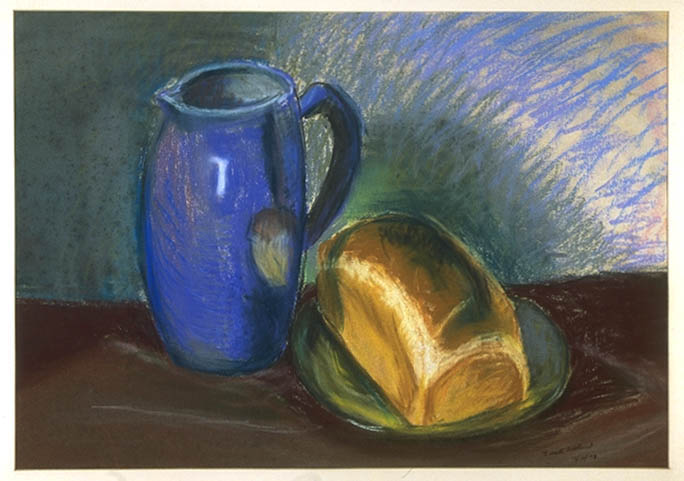
File:Bread and Pitcher.jpg
Bread and Pitcher by Lucille Wallenrod (Wikimedia Commons).


The Holy Gospel teaches us that the disciples of Jesus were powerless to resolve the affliction of a young boy. It must have been frightening and exhausting for the both the child and his father. Jesus illustrates the role of faith, trust and surrender to His Will, when facing any seemingly insurmountable crisis.

It takes faith to turn away from earthly distractions and ineffective solutions to problems. Daily tasks and concerns absorb precious minutes and hours with the greatest urgency. Spending time with Jesus in the Blessed Sacrament and actively seeking spiritual nourishment requires faith that Our Blessed Lord is in control of every outcome. His Will for our lives is perfect and holy. Prayer and fasting help us to recognize and obey God's will for us.

~Jesus spoke to the father of the child~
 "And Jesus saith unto him: If thou canst believe, all things are possible to him that believeth." Mark 9:22
~The disciples asked Jesus why they were unable 
to cast the demon spirit form the child~
  "And He said to them: This kind can go out 
by nothing but by prayer and fasting." Mark 9:28

Douay Rheims Roman Catholic Bible


Lora blogs at mommynovenas.