Our Members' Blogs

Showing posts with label John of the Cross. Show all posts

Sunday, August 11, 2013

Practical mysticism

by Connie Rossini


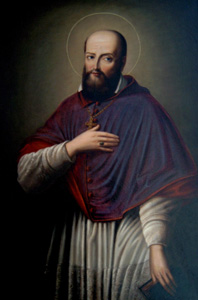
File:Franz von Sales.jpg
St. Francis de Sales (photo credit: Wikimedia Commons).


CSBN has been running a series on spiritual idiolects, a phrase I coined to mean the unique way each person relates to God. I hope that you will find "kindred spirits" in these posts, and be drawn to follow bloggers who have a similar spirituality to yours--or those whose are surprisingly different.

My spiritual idiolect is practical mysticism. I've always hated the saying, "He's so heavenly minded that he's no earthly good." The truly heavenly minded do the most earthly good. Think of St. Therese, who even wanted to do earthly good while in Heaven. She reached the heights of the prayer life, and actively loved her neighbors. That's what I aspire to. I want to be a contemplative wife and mother. I want to love God and my neighbor.

I loved St. Therese from the first time I read about her as a child. Her personality appealed to the romantic idealist in me.

Later, my older sister urged me to read Introduction to the Devout Life by St. Francis de Sales. Now, there's a great book! St. Francis taught lay people how they could be saints, giving them tips on every area of life. How do you know when temptation becomes sin? How can you practice Christian meditation? How can a lay person live in the world and be properly detached from it? St. Francis answers all these questions. I need concrete direction. That's why I love St. Francis.

The next saintly influence on my spiritual idiolect came from Teresa of Avila. Although I didn't really understand The Interior Castle the first time I read it, it drew me to a life of prayer. Eventually, I joined the Secular Order of Discalced Carmelites. They explained St. Teresa's teaching to me. They also introduced me to St. John of the Cross.

Today I am no longer OCDS, but I am thoroughly Carmelite in my spirituality. St. John in particular taught that mysticism is not a matter of visions, locutions, and altered states. Rather, it is a matter of a deep communion with God in prayer. Aspiring to be mystics as the world sees mysticism can be dangerous. Aspiring to grow in prayer is the call of every Christian.

Now I try to give practical spiritual help to others through my blog and ebooks. (I'm working on a full-length one right now to add to my short ebook published in June.) I like to teach people, including children, about the differences between true and false mysticism, Christian and eastern meditation, and Christian and pagan asceticism and detachment. I am striving to be holy in the little things of every day life. I am working to be heavenly minded and earthly good.


Connie Rossini is the administrator of Catholic Spirituality Blogs Network. Her personal blog is  Contemplative Homeschool.


Wednesday, July 24, 2013

Our biggest delusion

by Melanie Jean Juneau


File:George Inness - Morning - WGA11858.jpg
Morning  by George Inness (photo credit: Wikimedia Commons).


There is a world of difference between a man who is aware of himself, sitting on a hill and looking at a beautiful sunrise and a man so enthralled with that very same sunrise that he forgets himself and becomes  absorbed in the scene. In the first instance the man is egocentric; he is at the center 0f his world, not God

When I see beauty everywhere, I experience joy and a sense of connection because my eyes are not on myself. The truth is that I am simply part of the whole. Everything does not depend on me. I am free to relax and enjoy the beauty of nature and the Spirit of God which permeates all when I am in the right place in the scheme of things.

I am living in a fantasy when I see myself as the center of the universe, viewing everything as it circles around me. As believers we sing and recite prayers that proclaim that God is the center of all but our psychological make-up screams the exact opposite. I view people, events, history and yes even God through my eyes, judging what is right, trusting my thoughts and my feelings as the final judge of what is real. When Jesus says that we must die to ourselves, He is not speaking about some pious self-sacrifice that makes us look holy, no He has something much more radical in mind. The kind of inner transformation Jesus desires literally rips the rug up from under our feet and shatters our world view.

"I have been crucified with Christ and I no longer live, but Christ lives in me. The life I now live in the body, I live by faith in the Son of God, who loved me and gave himself for me" (Galatians 2:20).

Why is modern man so anxious, nervous, out of sorts? Part of the reason is probably that many people barely see a blade of grass during their normal work day. Surrounded by concrete and glass, our innate self craves connection with the rest of the natural world, other people , the communion of saints, (both living and dead) and at an even deeper level, God Himself. Instead we live in isolated, man-made prisons which shut out other human,s never mind other living creatures and God.  Each person is at the center of their little artificial universe. That means that each of us has assumed the role of king or queen of our tiny kingdoms with everything depending on us.

I was never designed to live alone like an island unto myself. Yet, in my pride, I cling tenaciously to my throne and crown. Only when I was completely depleted and shattered, only then did I resign and give God  back His job. Only the did I surrender an ego centric point of view and embraced reality which is that God is at the center of the universe and I am simply part of the Mystical  Body of Christ.

Definitely absurd, but I only saw this fact after I surrendered and let go of control. What is really important in life is not found in self-created delusion but discovered as I learn to live in harmony with a bigger universe than the one I created.

"In the total expanse of human life there is not a single square inch of which the Christ, who alone is sovereign, does not declare, ‘That is mine!’" (Abraham Kuyper).

St. John of the Cross (San Juan de la Crux), who lived in the 16th century, explains the inner process of becoming one with Christ:

I lose myself and remain,
With my face on the Beloved inclined;  
All has come to rest,  
I abandon all my cares  
There, among the lilies, to die.

 Melanie Jean Juneau blogs at  Joy of Nine.

Saturday, June 1, 2013

What is contemplation? Part 2: Supernatural contemplation

by Connie Rossini


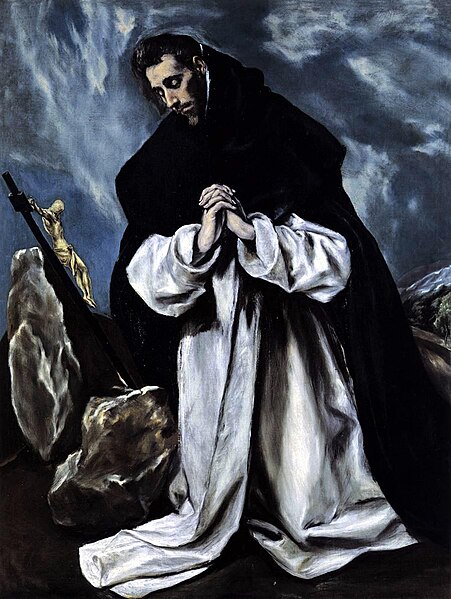
File:El Greco, St Dominic in Prayer.JPG
St. Dominic in Prayer by El Greco (Photo:Wikimedia Commons).


There are three major categories of contemplation. The first, which I wrote about last week, is natural contemplation. The second is the contemplation practiced in non-Christian religions. The third is supernatural contemplation. It is this third type of contemplation that St. Teresa of Ɓvila, St. John of the Cross, and other Carmelites refer to when they use the word “contemplation.”

Christian contemplation versus eastern meditation


 Non-Christian contemplation consists of an impersonal awareness. Zen Buddhists practice a meditation or contemplation that is agnostic. God does not come into play. Transcendental meditation, which comes from Hinduism, consists in losing one’s personality in an impersonal, all-encompassing deity. Both these varieties of contemplation are achieved by practitioners’ own actions, which lead to an altered state of consciousness.

Christian contemplation is completely different. It is a loving gaze at God who is Love. Supernatural in origin, it can’t be produced through techniques. Modern writers often use the modifier “infused” to indicate that God pours contemplation into the soul.

Meditating on Sacred Scripture (the Bible) can produce theological contemplation, also called acquired contemplation. Christian meditation teaches us to know and love Jesus, thus preparing us to open our hearts fully to God’s love. It helps us form the habit of quieting our souls before God, focusing on Him instead of ourselves. See an example of Christian meditation.


Continue reading about supernatural contemplation at Connie's blog  Contemplative Homeschool. 

Tuesday, April 16, 2013

What is Carmelite spirituality?

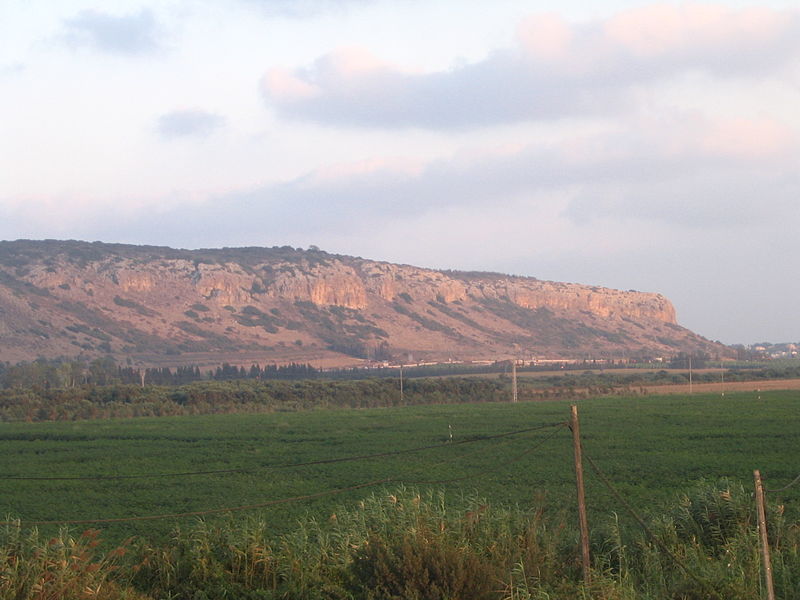
File:Caiobadner - mount carmel.JPG
by Connie Rossini

What is Carmelite spirituality? A couple of readers have asked me this question, and I assume several more have wondered and not asked. So I'm going to write this as a post (for maximum visibility and readership), then make it a permanent page soon.

Carmelite spirituality stems from the teaching and lifestyle of one of the oldest surviving religious orders in the Catholic Church. Like the Franciscans, Jesuits, Dominicans, and others, the Carmelites have a particular way of living out the faith, which has been approved by the Church. St. Therese of Lisieux, one of the best-beloved saints of our age, was a Carmelite nun.

From ancient Mt. Carmel to medieval Europe


In the 12th century, a group of Christian hermits settled on Mt. Carmel,  where the prophet Elijah had once lived in a cave. St. Albert of Jerusalem wrote a rule of life for them to follow. They built a monastery and came together for prayer, but each lived in his own cell. They dedicated their oratory to Mary, becoming known as the Brothers of the Blessed Virgin Mary of Mt. Carmel.

As always, tensions were high in the Middle East at this time. Soon the Carmelite brothers left the Holy Land for Europe. There they assumed an active life--that is, living and working in the world. Blessed John Soreth established the Carmelite nuns in 1452. The Third Order, for seculars, began two centuries later.

The reform by Teresa of Avila and John of the Cross


File:ZurbarƔn St. John of the Cross.jpg
Throughout the centuries many saints and blesseds in various countries reformed the Carmelites in their lands. The most significant reform came from saints Teresa of Avila and John of the Cross in 16th-century Spain. The communities they established eventually became the separate Discalced Carmelite Order. "Discalced" means "shoeless." They wore sandals as a sign of poverty and penance. Teresa and John were later named doctors of prayer by the Church. This means the Church not only approves their teaching, but recommends it to all Christians.

These days, the Carmelites of the Ancient Observance (O. Carm.) and the Discalced Carmelites (OCD) see themselves as two branches of the same family. Though their goals and teachings are somewhat different, they share much in common. There are also at least a half-dozen new members of the Carmelite family that have been approved by the Church, including the Monks of the Most Blessed Virgin Mary of Mount Carmel, to which my brother belongs.  They would probably all agree with the spirituality posts on this blog. Nevertheless, when I speak of Carmelite spirituality, I am speaking about OCDS spirituality, which is what I know most about. I was a member of the Secular Order of Discalced Carmelites (OCDS) for about 15 years.

Continue reading at Contemplative Homeschool.