Our Members' Blogs

Showing posts with label Rule of St. Benedict. Show all posts

Monday, March 24, 2014

The Benedictine Oblate and Christian Perfection

By Barbara A. Schoeneberger


Clear Creek Abbey Solemn Profession, 9/7/13, used with permission of the Abbot
Clear Creek Abby Solemn Profession of Vows, 9/7/13


Poverty, chastity, and obedience are called the three evangelical counsels, the counsels Jesus recommends in the Gospel for those who desire to do more than the minimum to get to heaven, and to aim at Christian perfection (Mt. 19:16-22). By Christian perfection we mean that extremely elusive condition of perfect charity, love of God and love of neighbor, that we will enjoy for all eternity and which we seek, by the grace of God, to reach in this life, sinners that we are. In fact, if we don’t work at it consistently and generously in this life, God will have a lot of polishing to do on us before He admits us to heaven when we die.

The vast majority of religious communities of priests, brothers, and nuns take these three as vows when they make their commitment to belong to their community forever. Through practicing these vows they witness to the world a higher reality. They declare through all of what the counsels imply that there is indeed something more enduring than this world. As laity, we can practice these counsels according to our state in life, too. The more we desire to reach Christian perfection out of love of Jesus, the more we can look to these three counsels to guide us in our daily choices.

Continue reading at Barb's blog Suffering with Joy.

Friday, March 7, 2014

St. Benedict on humility and disinterstedness

By Barbara A. Schoeneberger


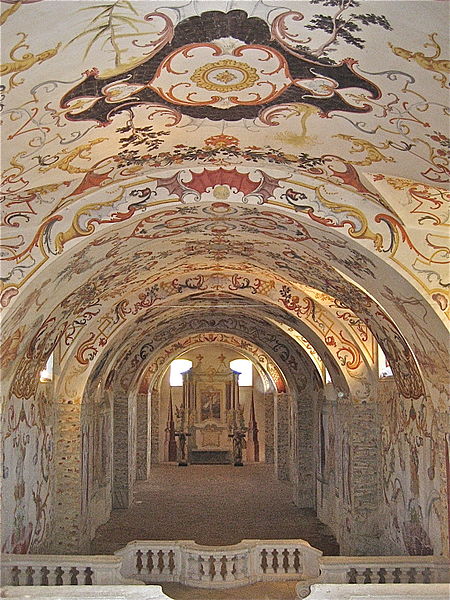
File:Stift Altenburg 9.jpg
Altenburg Abbye (photo by Tyssel,
Wikimedia Commons)


The year 1875 marked the 1500 anniversary of the birth of St. Benedict, whose Rule I am bound to follow by my choice of becoming an Oblate. Now, another 125 + years later, not a day goes by that I do not marvel at the wisdom of this “Father of Western Monasticism” and how it applies to my life today. Moreover, by the grace of God I can see how He has arranged my life to make it possible to follow this Rule without complications. Not that the road is easy – just that the path is not hidden. The barbed-wire fences and hedgerows along the way keep me from wandering beyond the point where I would lose direction. That is, in fact, one purpose of having a rule in the first place.
In Chapter 57 St. Benedict writes:

If there are craftsmen in the monastery, let them practice their crafts with all humility, provided the Abbot has given permission. But if any one of them becomes conceited over his skill in his craft, because he seems to be conferring a benefit on the monastery, let him be taken from his craft and no longer exercise it unless, after he has humbled himself, the Abbot again gives him permission.

Abbots, like parents, have special graces granted by God to fulfill their duties of guiding and protecting the spiritual and temporal life of the family. In the case of the monastery, the community is supposed to be self-sufficient under the direction of the abbot. The talents of the various members are to be applied, according to the discretion of the abbot, in the service of the daily upkeep of the household.


Continue reading at Barb's blog Suffering With Joy.

Saturday, January 18, 2014

Are you a good cellarer?

By Barabara A. Schoeneberger,


Monk Feeding the Poor by Louis Gaillet
Monk Feeding the Poor by Gaillet


A central figure in the life of a Benedictine monastery is the cellarer. Hmmm. What does that have to do with me? I’m not a monk or nun and what the heck is a cellarer anyway? In Chapter 31 of his holy rule, St. Benedict clearly defines what kind of man the cellarer should be, and light bulbs went on when I read this section of  a document that guided the lives of many beginning over 1600 years ago. I should care and it does have a lot to do with me and everyone else today who calls himself Christian. How?

The cellarer, called the “steward”, is the monk charged by the Abbot with the whole administration of all temporal things at the monastery. He is the one everybody must go to for food, clothing, tools, supplies, etc. Obviously, this is a person of power because he has authority over the distribution of earthly goods necessary to daily living, not unlike the head of a family today, the pastor of a parish, the boss at work, etc. In a way, most of us are cellarers because most of us have some charge of earthly goods in relation to others.

We have now leapt from the 400s into the 21st century.

Attributes of the cellarer

As cellarer of the monastery let there be chosen from the community one who is wise, of mature character, sober, not a great eater, not haughty, not excitable, not offensive, not slow, not wasteful, but a God-fearing man who may be like a father to the whole community.

 Continue reading at Barb's blog  Suffering With Joy